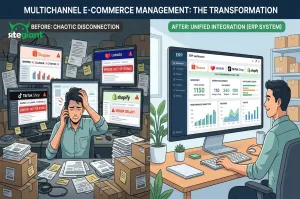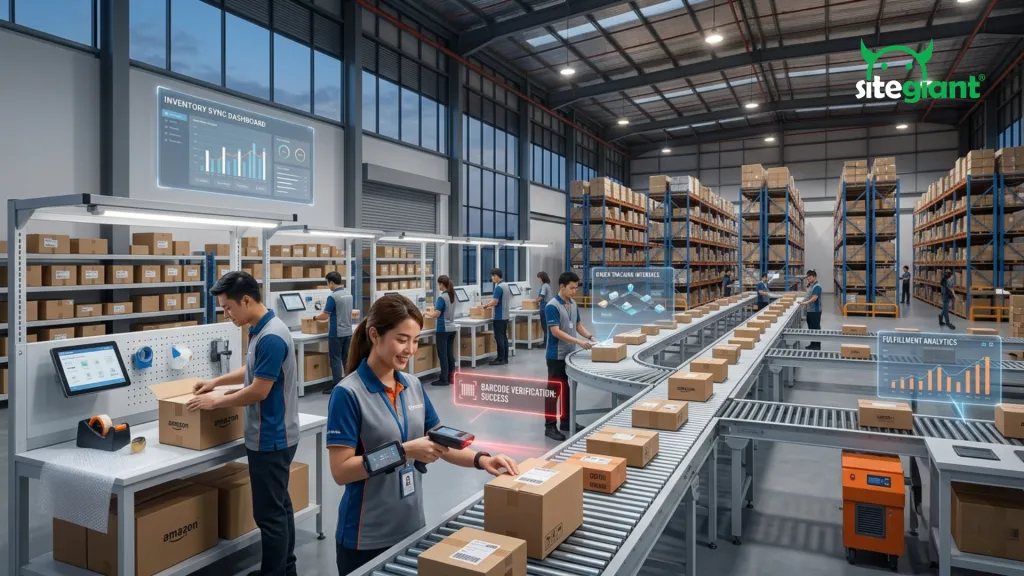
As ecommerce businesses in Singapore continue to grow across platforms like Shopee, Lazada, TikTok Shop, Zalora, and webstores, order fulfillment is becoming more complex than ever. Many sellers struggle to reduce human error in ecommerce order fulfillment, especially when daily order volumes increase during peak campaigns like 11.11, 12.12, Raya, and festive sales.
Common fulfillment mistakes include:
- Picking the wrong SKU
- Sending the wrong size or color
- Missing items in parcels
- Duplicate shipments
- Incorrect shipping labels
These issues may seem small, but over time, they lead to higher operational costs, increased return rates, and lower seller ratings on marketplaces. In this guide, we’ll explain the main causes of fulfillment errors, how to reduce them, and why the right system can help you improve accuracy, reduce costs, and scale your operations more efficiently in 2026.
What Is Human Error in Ecommerce Order Fulfillment?
What Is Human Error in Ecommerce Order Fulfillment?
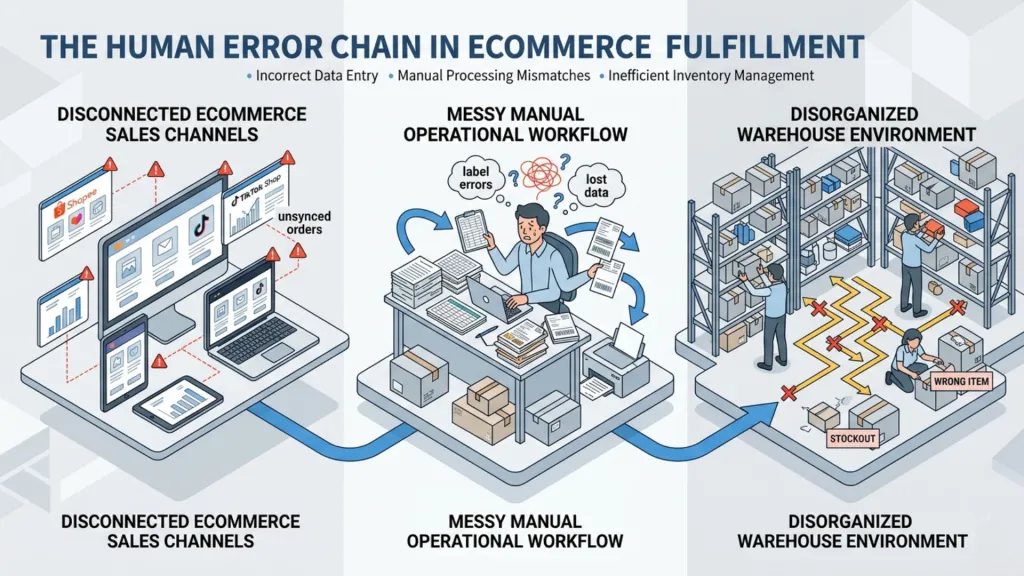
Human error in ecommerce order fulfillment refers to mistakes that occur during the process of handling and delivering customer orders.
These errors can happen at different stages of the fulfillment workflow, including:
- Picking the wrong product or SKU from the warehouse
- Packing the wrong item, size, or quantity into parcels
- Printing incorrect or mismatched shipping labels
- Shipping orders to the wrong customer or address
In simple terms, human error happens when manual processes, lack of verification, or unclear workflows lead to incorrect or incomplete orders being delivered. This is especially common in fast-growing e-commerce businesses that manage multiple sales channels without a centralized system or real-time inventory visibility.
Why It Matters
Human error in ecommerce order fulfillment affects more than just daily operations—it. It directly impacts your costs, customer experience, and long-term business growth.
Even a small mistake can result in:
- Higher return and refund costs
- Increased customer complaints and negative reviews
- Lower seller ratings on marketplaces
- Penalties for late, incorrect, or incomplete shipments
Over time, repeated fulfillment errors can reduce your store visibility on platforms like Shopee and Lazada, damage your brand reputation, and limit your ability to scale during high-demand periods. This is why reducing human error is not just an operational improvement—it. It is a critical strategy for improving fulfillment accuracy, protecting seller performance, and maintaining sustainable growth.
Common Causes of Human Error in Ecommerce Fulfillment
Understanding the root causes of fulfillment mistakes is the first step to reducing human error in
ecommerce order fulfillment. In most cases, these errors are not caused by careless staff, but by inefficient systems, manual workflows, and lack of process standardization.
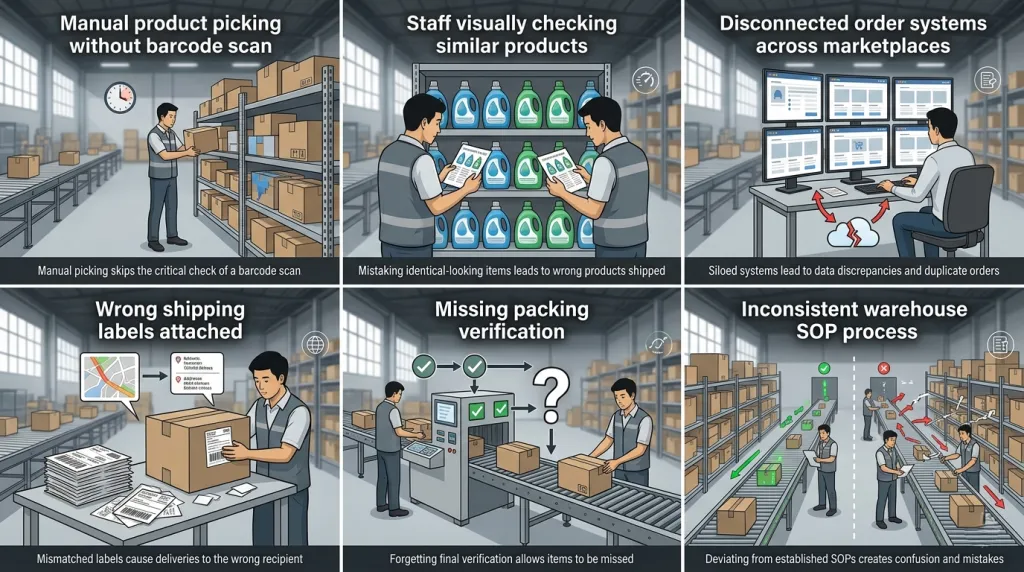
1. Manual Picking & Visual Checking
Many warehouses still rely on manual picking methods, where staff use memory, printed pick lists, or visual checking to locate items.
This approach becomes highly error-prone when:
- Order volume increases
- Products have similar packaging or variations
- Staff are under time pressure during campaigns
Without a structured warehouse picking system, it is easy to pick the wrong SKU, leading to incorrect shipments and costly returns.
2. No Barcode Verification
Without barcode scanning, there is no system-based validation to confirm whether the correct item is picked and packed.
This means:
- Staff rely entirely on manual checking
- There is no double verification process
- Errors cannot be detected before shipping
Implementing a warehouse barcode system ensures that every item is scanned and verified, significantly improving fulfillment accuracy.
3. Disconnected Order Systems
Many ecommerce sellers manage orders separately across Shopee, Lazada, TikTok Shop, and their webstore.
This creates:
- Duplicate or missed orders
- Confusion between platforms
- Delays in order processing
Without a centralized order management system or multi-channel ERP, teams are forced to switch between dashboards, increasing the risk of human error and delayed shipments.
4. No Packing Proof
When customers report missing or incorrect items, many sellers have no way to verify what was actually packed.
This leads to:
- Unnecessary refunds or replacements
- Losses from fraudulent claims
- Increased customer service workload
Without a packing verification system, businesses lack accountability and protection during disputes.
5. Weak or Inconsistent SOP
A lack of standardized operating procedures (SOP) means different staff follow different workflows.
Common issues include:
- Inconsistent picking and packing steps
- No clear process for handling orders
- Poor training for new staff
This inconsistency reduces warehouse productivity and increases the likelihood of errors, especially as the team grows.
Business Impact of Human Error in Order Fulfillment
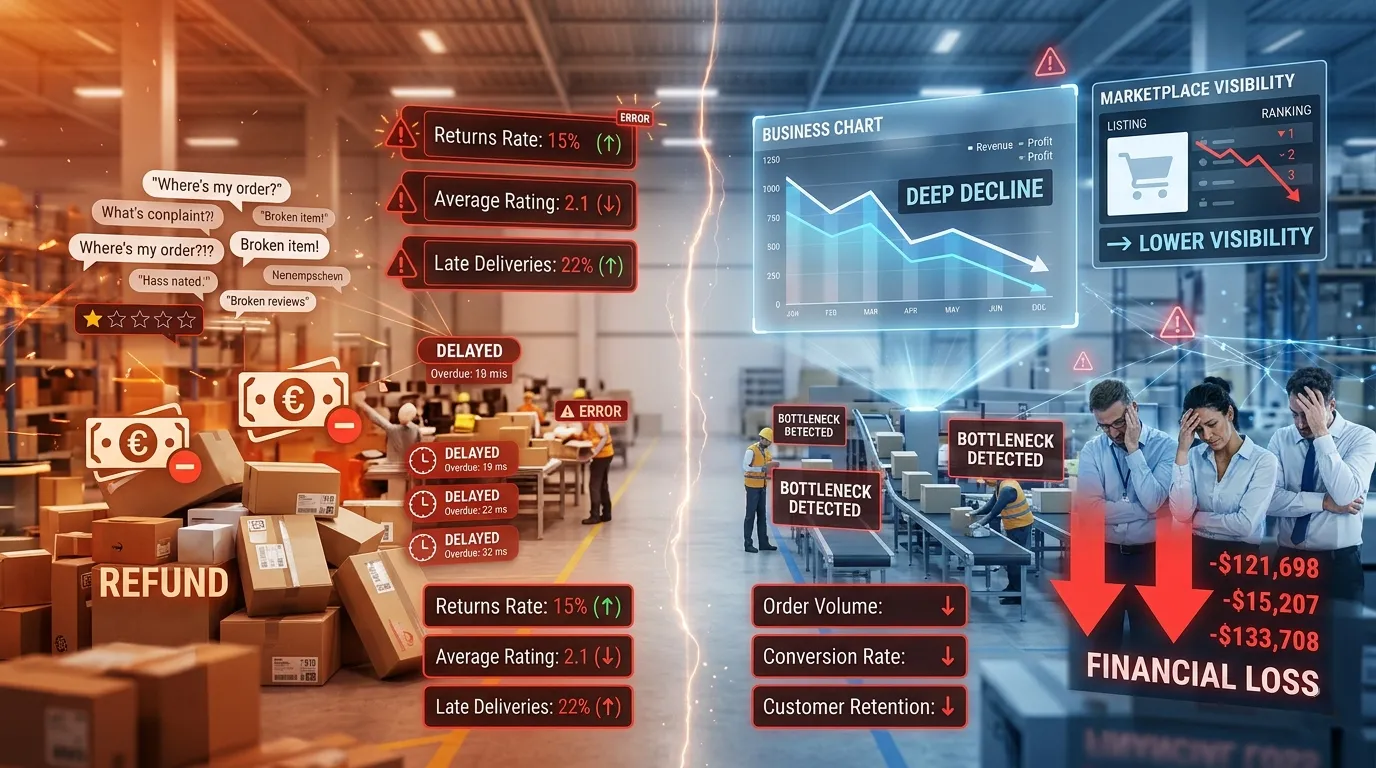
Human error in ecommerce order fulfillment does not only create small operational issues—it has a direct and measurable impact on your costs, marketplace performance, and long-term business growth. As order volume increases, even minor mistakes can quickly turn into significant financial and operational risks.
Operational Cost Impact:
Fulfillment errors directly increase your operational costs and reduce profit margins. Common cost impacts include:
- Higher return shipping costs due to incorrect or incomplete orders
- Refund losses when customers receive the wrong items
- Replacement costs for reshipping correct products
- Overtime labor required to fix errors and reprocess orders
- Increased customer service workload handling complaints and disputes
Over time, these hidden costs can significantly affect your overall profitability—especially for businesses with high daily order volume.
Marketplace Impact:
On platforms like Shopee, Lazada, and TikTok Shop, fulfillment accuracy is closely tied to your seller performance.
Frequent errors can result in:
- Lower seller ratings due to negative customer feedback
- Delayed shipment penalties when orders are processed incorrectly
- Lower marketplace visibility due to poor performance metrics
- Loss of preferred seller or “star seller” status
- Increased cancellation or dispute rates
These penalties not only reduce your current sales but also limit your future growth potential on the platform.
Growth Impact:
Beyond immediate costs and penalties, human error creates long-term challenges that make it harder to scale your business.
Key growth limitations include:
- Difficulty handling high order volume during campaigns (11.11, 12.12, festive sales)
- Warehouse bottlenecks caused by inefficient picking and packing workflows
- Reduced customer trust due to inconsistent order accuracy
- Lower repeat purchase rates and weaker brand loyalty
Without improving fulfillment accuracy and workflow efficiency, businesses will struggle to scale operations sustainably.
6 Ways to Reduce Human Error in Ecommerce Order Fulfillment
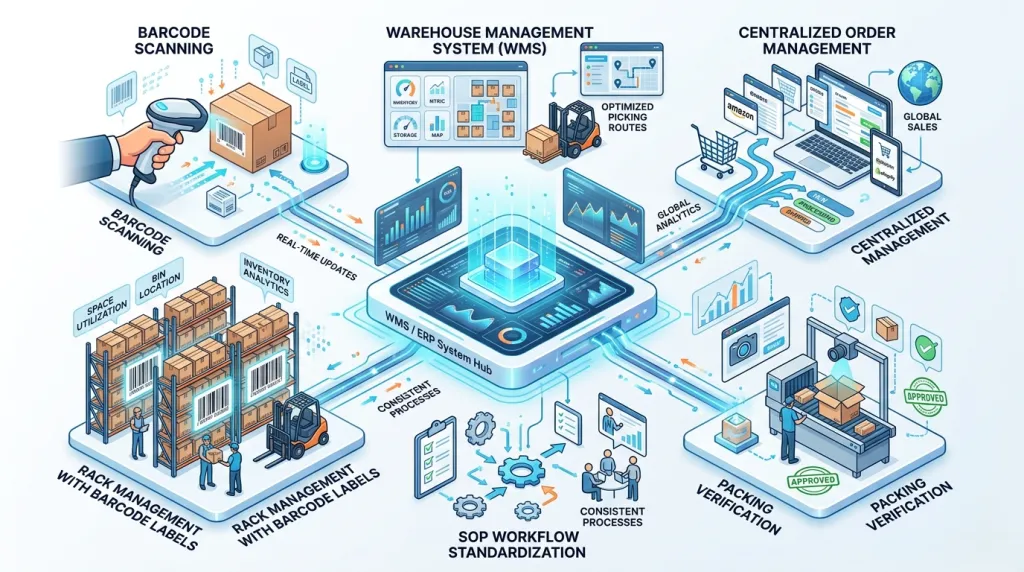
Reducing human error in ecommerce order fulfillment is not about working harder—it’s about building the right system and workflow. Here are 6 proven strategies used by high-performing ecommerce sellers in Singapore to improve fulfillment accuracy, reduce operational costs, and scale efficiently.
1. Use Barcode Scanning Instead of Manual Checking
Manual checking is one of the biggest causes of picking and packing errors. When staff rely on memory or visual confirmation, mistakes are almost unavoidable—especially during high-volume periods. Barcode scanning adds a critical layer of verification to your fulfillment process.
Benefits:
- Prevent wrong SKU picking with real-time verification
- Improve picking speed and workflow efficiency
- Increase overall fulfillment accuracy
- Reduce returns caused by incorrect items
By implementing a warehouse barcode system, every item must be scanned before packing—ensuring accuracy at every step.
2. Implement a Warehouse Management System (WMS)
A warehouse management system (WMS) is essential for businesses looking to reduce human error and standardize warehouse operations.
With SiteGiant WMS, you can:
- Scan stock using smartphone or PDA devices
- Manage rack locations with real-time visibility
- Assign picking tasks automatically to staff
- Verify items during picking and packing
- Track employee performance and productivity
This creates a structured warehouse picking workflow that minimizes manual errors and improves operational efficiency.
3. Centralize Orders with ERP/Order Management System
Managing orders separately across Shopee, Lazada, TikTok Shop, Zalora, and your webstore increases the risk of missed, duplicated, or delayed orders.
A centralized order management system (OMS) or ERP allows you to:
- Manage all orders from multiple platforms in one dashboard
- Synchronize inventory in real time across channels
- Reduce manual data entry errors
- Improve order processing speed and accuracy
This is especially important for multichannel ecommerce businesses, where consistency and speed are critical for maintaining seller performance.
4. Add Packing Verification with ParcelGuard
Packing errors and false claims can lead to unnecessary refunds, disputes, and revenue loss. Using packing verification tools like ParcelGuard from SiteGiant helps you:
- Record packing processes for every order
- Provide video or image proof during customer disputes
- Improve staff accountability during packing
- Reduce refund losses caused by “missing item” claims
This adds a layer of protection to your fulfillment process and helps maintain customer trust.
5. Standardized Warehouse SOP
Even with the right tools, a lack of standardized processes can still lead to errors. A clear and consistent warehouse SOP (Standard Operating Procedure) ensures that every staff follows the same workflow.
Key areas to standardize include:
- Shelf labeling and product categorization
- Picking sequence and routing
- Packing procedures and quality checks
- Courier handover and dispatch timing
Standardization improves warehouse productivity, reduces confusion, and ensures consistent fulfillment accuracy—especially when onboarding new staff.
6. Use Rack Management with Barcode Lables
Poor inventory organization is a major cause of picking errors and slow fulfillment. Implementing rack management with barcode labels allows staff to locate items quickly and accurately.
This helps to:
- Improve picking speed and reduce search time
- Minimize picking errors caused by misplaced items
- Enhance overall warehouse efficiency and organization
- Support scalable operations as inventory grows
By combining rack location systems with barcode scanning, businesses can create a highly efficient and error-resistant fulfillment workflow.
Frequently Asked Questions (FAQ)
What causes human error in ecommerce order fulfillment?
Manual workflows, stock mismatches, lack of barcode verification, and disconnected systems are the main causes. These issues increase picking, packing, and shipping mistakes—especially during high order volumes.
How does barcode scanning reduce ecommerce fulfillment errors?
Barcode scanning adds a real-time verification step during picking and packing. It ensures the correct SKU is selected, reducing manual errors and improving fulfillment accuracy.
Do SMEs need a warehouse management system (WMS)?
Yes. A WMS helps SMEs standardize workflows, improve inventory tracking, and reduce human error—especially when order volume increases or when selling across multiple platforms.
Can ecommerce fulfillment mistakes lead to platform penalties?
Yes. Errors like late shipments, incorrect orders, and cancellations can lower seller ratings, reduce visibility, and lead to penalties on platforms like Shopee and Lazada.
Conclusion
Human error in ecommerce order fulfillment is one of the most overlooked factors that silently increases operational costs and limits business growth. Most fulfillment mistakes are not caused by careless staff—but by inefficient systems, manual workflows, and lack of process standardization.
As your ecommerce business scales, relying on manual operations will:
- Increase operational risks and hidden costs
- Hurt your seller ratings and marketplace performance
- Reduce fulfillment accuracy and customer satisfaction
- Limit your ability to scale during peak campaigns
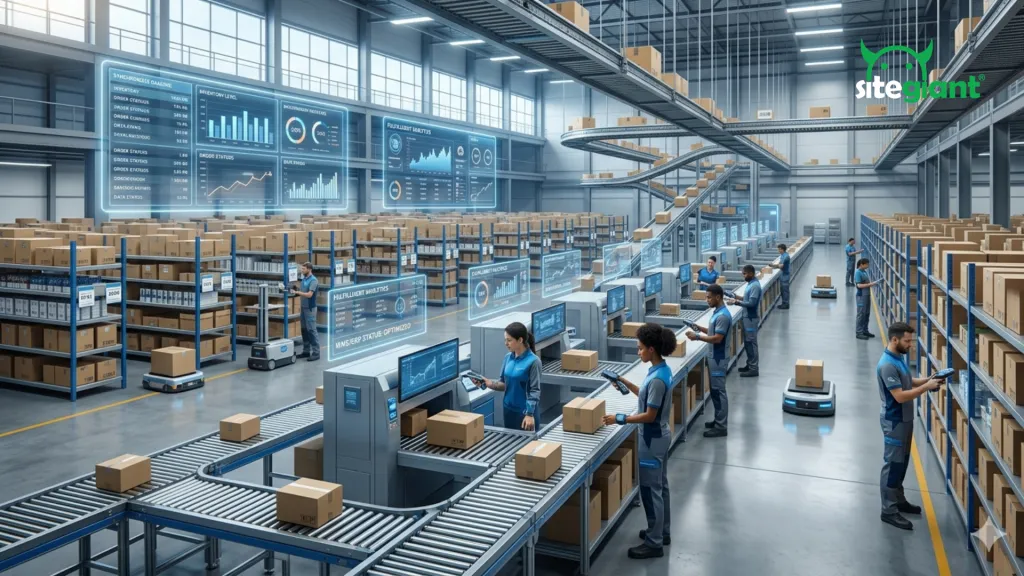
To effectively reduce human error in ecommerce order fulfillment, businesses need to move from manual processes to integrated, system-driven operations. This is where solutions like SiteGiant make a significant difference.
With a complete ecosystem that includes an Order Management System (OMS), Warehouse Management System (WMS), real-time inventory sync, ParcelGuard, POS, and OMO capabilities, businesses can:
- Eliminate manual order handling
- Improve picking and packing accuracy
- Synchronize inventory across multiple platforms
- Standardize workflows for consistent operations
- Automate fulfillment processes with confidence
In short, fewer errors lead to lower costs, faster fulfillment, and stronger store performance. If you’re looking to scale your ecommerce business while maintaining accuracy and efficiency, now is the time to invest in the right system. Because in today’s competitive ecommerce landscape, the businesses that succeed are not the ones working harder —— they are the ones building smarter, more scalable systems.