
Order accuracy is one of the most critical factors in eCommerce success, especially for fast-growing sellers in Singapore where multichannel orders are increasing daily. As businesses expand across platforms like Shopee, Lazada, and TikTok Shop, the complexity of order fulfillment also increases significantly, making it more difficult to maintain consistent accuracy in daily warehouse operations.
This situation is often caused by several underlying factors within the fulfillment process.
- Many eCommerce sellers still rely on manual picking, which often leads to wrong items or wrong variants being shipped.
- High order volume from Shopee, Lazada, and TikTok Shop increases the chances of human error.
- Inventory is not updated in real time, causing wrong stock allocation or overselling.
- High order error rates lead to customer complaints, refund requests, and bad reviews on platforms like Shopee, Lazada, and TikTok Shop.
- No standardized picking or packing process , leading to inconsistent workflow among staff.
Therefore, a Warehouse Management System (WMS) becomes essential as it helps reduce picking errors, improve order accuracy, and standardize warehouse processes through automation and better inventory control, ensuring every order is fulfilled correctly and efficiently. In this blog, we will explore the common causes of low order accuracy and how a Warehouse Management System (WMS) can help improve fulfillment performance.
What is Order Accuracy?
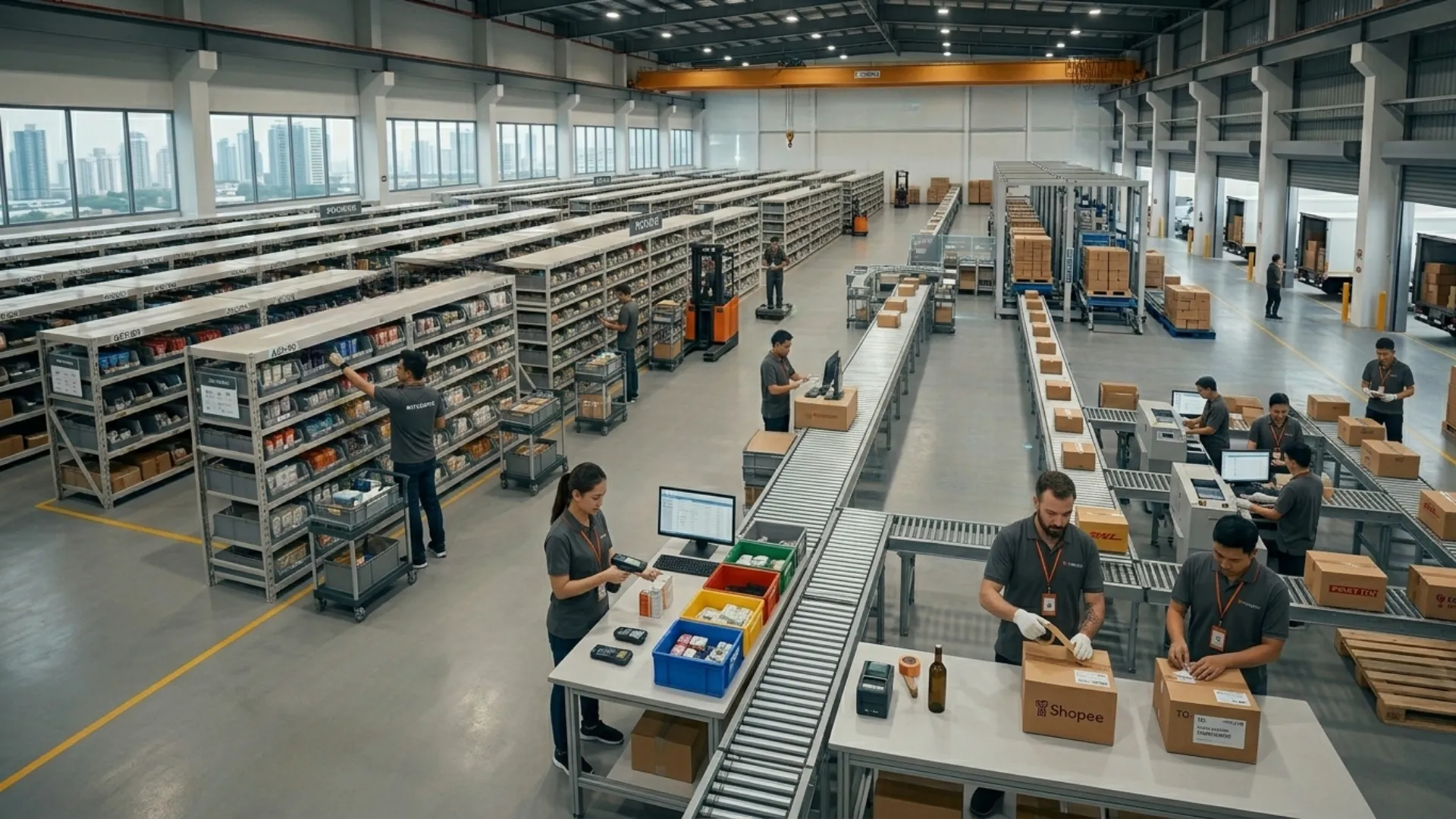
Order accuracy refers to how correctly customer orders are fulfilled from warehouse to final delivery. It measures the overall accuracy of picking, packing, and shipping processes, ensuring that the correct product, correct variant, and correct quantity are delivered to customers without errors.
- Order accuracy is a key performance indicator (KPI) used to evaluate overall eCommerce warehouse efficiency and operational performance.
- It is directly linked to customer satisfaction, as accurate fulfillment creates a smoother and more reliable shopping experience.
- Low order accuracy usually indicates weaknesses in warehouse processes, system control, or fulfillment workflow consistency.
- High order accuracy reflects fewer operational mistakes, smoother daily warehouse operations, and stronger process control across the fulfillment cycle.
Overall, order accuracy is a key foundation for efficient warehouse operations and smooth order fulfillment processes. It directly impacts customer satisfaction as well as the overall performance of eCommerce businesses across multiple sales channels. Therefore, improving order accuracy is essential for achieving long-term operational efficiency and sustainable business growth.
What Causes Low Order Accuracy in eCommerce Warehouses?

Low order accuracy in eCommerce warehouses is mainly caused by inefficiencies in daily fulfillment processes and weak system control. As order volume increases across multiple sales channels, manual operations become more prone to mistakes and inconsistencies.
- Manual picking without system guidance often leads to human errors, especially when staff rely on memory or visual checks during busy periods.
- Wrong SKU selection happens due to similar product variations such as size, color, or model differences, which are easy to confuse in fast-paced operations.
- Lack of barcode scanning verification increases the risk of incorrect picking and packing because there is no system-level validation step.
- Poor warehouse organization makes it harder for staff to locate products accurately and efficiently, leading to delays and mistakes.
- Lack of real-time stock updates results in inaccurate inventory data across sales channels, which can cause overselling or wrong allocation.
As a result, these issues significantly reduce order accuracy and create inconsistency in daily warehouse performance. Therefore, improving warehouse structure, system automation, and operational discipline is essential for achieving higher fulfillment accuracy and efficiency.
Why is Order Fulfillment Accuracy Important?

Order fulfillment accuracy is important because it directly affects customer experience, operational efficiency, and overall business performance in eCommerce. When orders are fulfilled correctly, businesses can build stronger trust and maintain stable growth across multiple sales channels.
- It ensures customers receive the correct products they ordered, which improves satisfaction, strengthens trust, and encourages repeat purchases.
- It helps maintain positive seller ratings on platforms like Shopee, Lazada, and TikTok Shop while also improving brand reputation and market visibility.
- It improves warehouse efficiency and reduces operational costs by minimizing time wasted on corrections, returns, re-shipping, and customer disputes.
- It supports business scalability and smooth operations even during high order volumes, while also reducing return and refund rates caused by fulfillment errors.
- High fulfillment errors can increase Marketplace Non-Fulfillment Rate (NFR), which may lead to penalties, lower seller performance scores, and limited campaign participation.
Overall, maintaining high order fulfillment accuracy is essential for ensuring efficient operations and protecting business performance. Therefore, it plays a critical role in both customer satisfaction and long-term eCommerce growth.
How can a WMS system improve order accuracy?
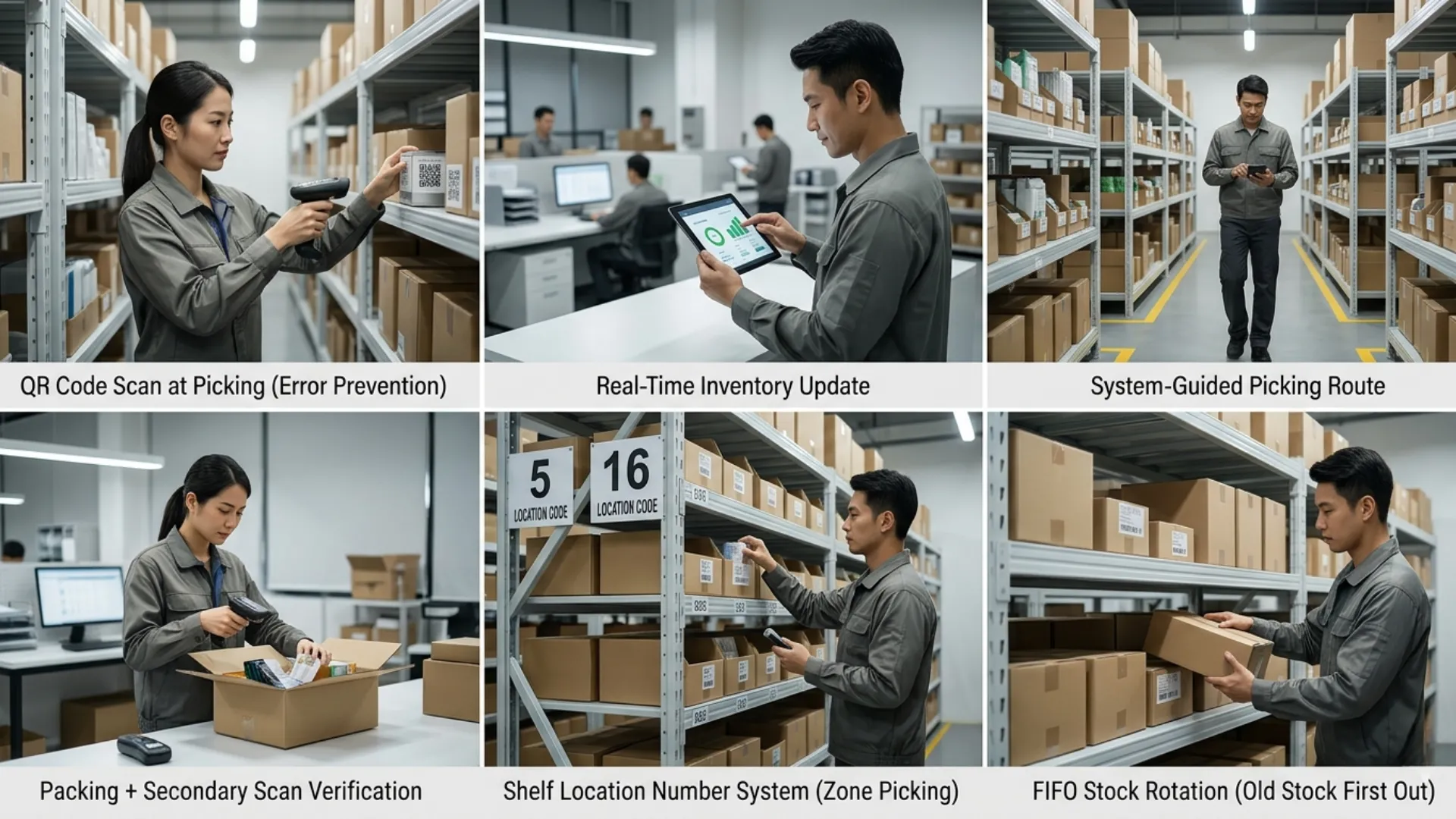
A Warehouse Management System (WMS) improves order accuracy by digitizing and standardizing warehouse operations. It reduces human error by guiding every step of the fulfillment process from picking to shipping.
1. Barcode Scanning Prevents Wrong Item Picking – Each product has a unique SKU barcode, and the WMS system verifies items during the picking process. This reduces human selection errors and ensures higher picking accuracy during daily operations.
2. Real-Time Inventory Updates – Stock is updated instantly after each transaction, which helps prevent overselling and wrong stock allocation. This also reduces high non-fulfillment rates across multiple sales channels.
3. Guided Picking System – Warehouse staff receive step-by-step picking instructions that include what to pick, how many to pick, and where to pick. This improves accuracy while reducing unnecessary warehouse movement.
4. Packing Verification Process – The WMS system confirms the correct item before dispatch, ensuring that every order is checked before shipment. This significantly reduces wrong shipment incidents.
5. Implement Zone Picking System – Pickers are assigned to specific warehouse zones to reduce unnecessary movement and improve efficiency. This also reduces confusion and increases picking accuracy, especially in high SKU warehouses.
6. Warehouse Rack Management – Warehouse racks are labeled with QR codes or location numbers to make product locating faster and more accurate. This helps reduce picking mistakes and improves overall warehouse organization.
7. First in first out (FIFO) – Older stock is shipped before newer inventory to ensure proper stock rotation. This helps manage expiry dates, reduce wastage, and improve fulfillment accuracy for batch-sensitive products.
Frequently Asked Questions (FAQ)
Why are picking errors common in eCommerce warehouses?
Picking errors is common in eCommerce warehouses because many operations still rely on manual processes and lack proper system support. In addition, similar product variations, unorganized layouts, and high order volumes during peak periods further increase the chances of mistakes.
How does a WMS improve order accuracy?
A WMS improves order accuracy by automating key warehouse processes and reducing reliance on manual work. It also uses barcode scanning and real-time inventory updates to minimize human errors during picking and packing.
How does real-time inventory tracking improve warehouse efficiency?
Real-time inventory tracking helps businesses maintain accurate stock levels across all sales channels. This improves warehouse efficiency by preventing overselling, reducing stock discrepancies, and increasing inventory visibility.
How can businesses reduce picking errors in warehouses?
Businesses can reduce picking errors by implementing barcode scanning, organizing warehouse layouts, and standardizing workflows. In addition, using a Warehouse Management System (WMS) and proper staff training further improves accuracy.
Conclusion
Reducing picking errors and improving order accuracy are important for maintaining smooth warehouse operations and delivering a better customer experience. As eCommerce businesses grow across platforms like Shopee, Lazada, and TikTok Shop, manual fulfillment processes can easily lead to wrong shipments, inventory errors, and delayed deliveries that affect both operational efficiency and seller performance.
To help businesses manage warehouse operations more efficiently, SiteGiant WMS offers features such as real-time inventory synchronization, barcode scanning, centralized order management, and systematic picking and packing processes. These tools help businesses reduce human errors, improve fulfillment accuracy, and streamline daily warehouse workflows from a single platform.
SiteGiant WMS also helps improve overall order fulfillment accuracy by providing better inventory visibility and more structured warehouse operations. With systematic picking, packing verification, and organized inventory control, businesses can ensure the correct products, quantities, and variations are fulfilled accurately before shipment. This helps reduce fulfillment mistakes, lower return rates, and improve customer satisfaction across multiple sales channels.
With a more organized and automated warehouse system, businesses can improve productivity, reduce costly mistakes, and handle higher order volumes more efficiently. Implementing the right WMS not only supports smoother operations but also helps eCommerce businesses scale with greater confidence and better customer satisfaction.