As businesses continue expanding across eCommerce platforms and sales channels, inventory management has become more challenging than ever. Many businesses still struggle to predict how much stock they actually need, which often leads to inventory issues that affect daily operations and sales performance.
Many businesses struggle with:
- Running out of stock during high-demand periods
- Overstocking products that move too slowly
- Inaccurate inventory planning from manual forecasting
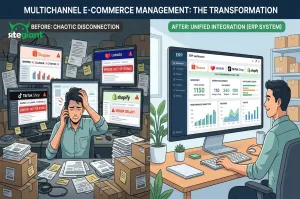
- Difficulty tracking inventory across multiple sales channels
- Delayed purchasing decisions due to a lack of real-time inventory data
- Higher storage costs caused by excess inventory
- Lost sales opportunities due to poor stock availability
These challenges often result in unnecessary operational costs, lower customer satisfaction and slower business growth.
This is why inventory forecasting has become increasingly important for eCommerce and retail businesses. By analyzing sales trends, inventory movement, and customer demand, businesses can make better inventory planning decisions and improve overall operational efficiency.
In this blog, we will explain what inventory forecasting is, why it matters for eCommerce businesses, and how solutions like SiteGiant ERP can help businesses plan stock more accurately across multiple sales channels.
What is Inventory Forecasting?

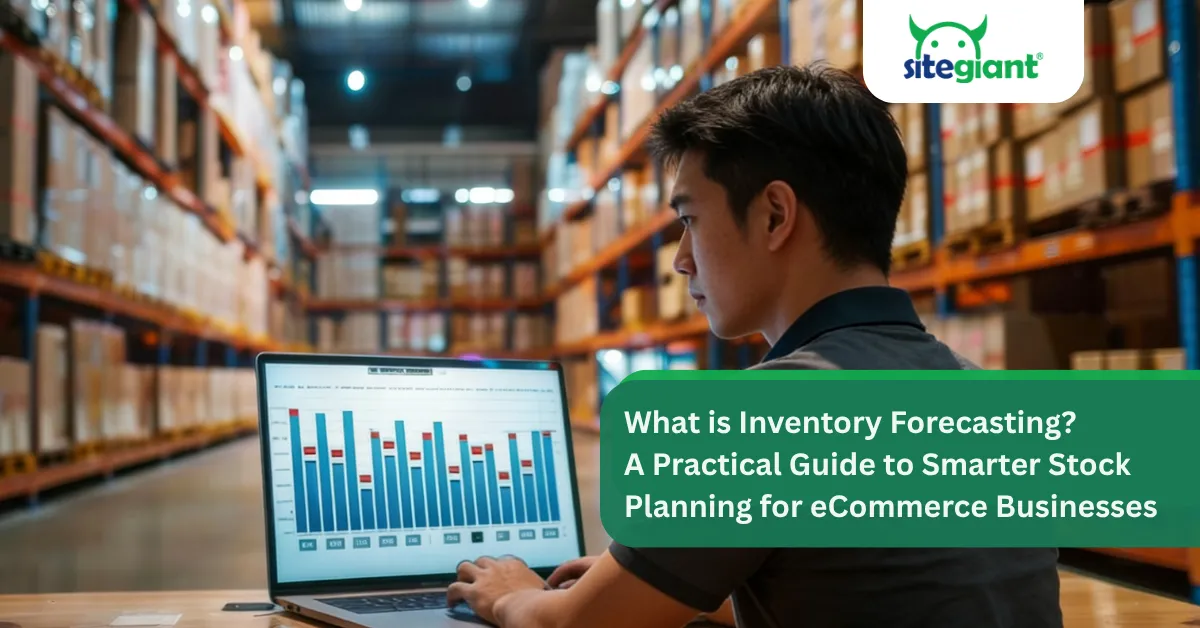
Inventory forecasting is the process of predicting how much stock a business will need within a specific period based on sales trends customer demand and inventory data. The goal is to maintain the right stock levels to avoid stock shortages or excess inventory.
Businesses use inventory forecasting to plan purchases, manage warehouse space and improve inventory replenishment decisions. Instead of relying on guesswork, businesses can make more accurate decisions using historical sales data demand trends and seasonal patterns.
Inventory forecasting is also an important part of inventory management because it helps businesses:
- Improve stock availability
- Reduce overstocking and dead stock
- Prevent missed sales opportunities
- Optimize inventory turnover
- Support better purchase planning
For eCommerce businesses, especially those selling across multiple channels, inventory forecasting becomes even more important, as inventory movement can change quickly during campaigns, promotions, and peak sales periods.
Inventory Forecasting vs. Replenishment: What’s the Difference?
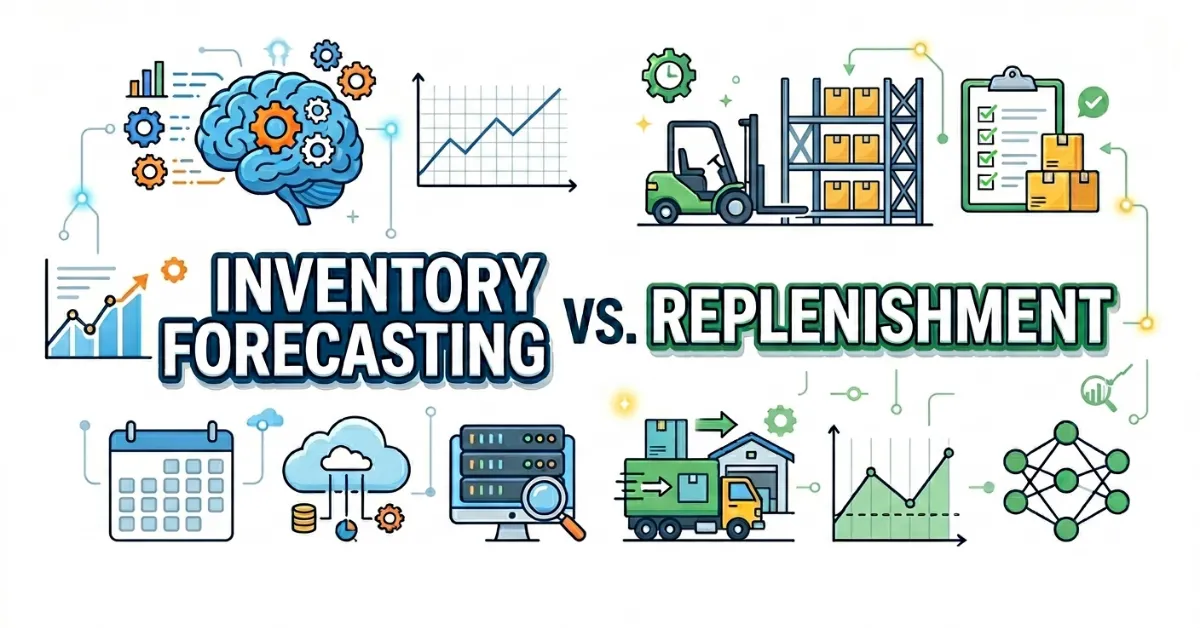
Inventory forecasting and replenishment are closely related, but they focus on different parts of inventory planning. Forecasting helps businesses predict future demand, while replenishment focuses on restocking inventory based on those demand insights.
Aspect | Inventory Forecasting | Inventory Replenishment |
Purpose | Predict future demand | Restock inventory |
Focus | Planning stock needs | Maintaining stock levels |
Based on | Sales trends and demand data | Stock levels and lead time |
Goal | Avoid stock shortages and overstocking | Ensure products are restocked on time |
Inventory forecasting helps businesses predict future stock requirements by analyzing demand trends and sales data. It provides the insights needed to estimate how much inventory should be available in the future. Replenishment is the next step, helping businesses restock products at the right time to maintain optimal inventory levels and avoid stock shortages.
Common Inventory Forecasting Methods

Inventory forecasting can be done in different ways depending on how large the business is and how much data is available. Some businesses use simple historical data while others use more advanced systems that analyze demand in real time. The goal is always to predict future demand as accurately as possible so inventory decisions can be made with confidence.
1. Historical sales forecasting
This method uses past sales data to predict future demand. Businesses look at how products performed in previous weeks or months and use that pattern to estimate future stock needs. It works well for stable products that have consistent demand over time.
2. Trend-based forecasting
This method focuses on market trends and customer behavior changes. When a product becomes more popular, demand increases quickly. Businesses use this method to adjust stock levels based on rising or declining interest.
3. Seasonal forecasting
Some products sell more during specific periods such as festive seasons or major sales campaigns. Seasonal forecasting helps businesses prepare higher stock levels before peak seasons and reduce inventory after demand drops.
4. Demand planning based forecasting
This method combines sales data, marketing plans and customer demand insights. It helps businesses prepare for upcoming promotions or campaigns so they can avoid stock shortages during high traffic periods.
5. System based or automated forecasting
Modern inventory systems can analyze data automatically and suggest stock levels based on real time information. This reduces manual work and improves accuracy, especially for businesses selling across multiple channels.
Basic Inventory Forecasting Formula
Businesses use different methods to forecast inventory depending on their sales volume and operational needs. One of the most common approaches is estimating inventory based on sales speed, supplier lead time, and safety stock levels.
A simple inventory forecasting formula is:
Forecasted Inventory Needed=(Daily Sales Average × Supplier Lead Time)+Safety Stock
- Daily Sales Average: Estimated number of units sold each day
- Supplier Lead Time: Time needed for suppliers to deliver new stock
- Safety Stock: Additional inventory prepared as backup stock
A simple inventory forecasting formula is:
Forecasted Inventory Needed=(Daily Sales Average × Supplier Lead Time) + Safety Stock
Daily Sales Average: Estimated number of units sold each day
Supplier Lead Time : Time needed for suppliers to deliver new stock
Safety Stock: Additional inventory prepared as backup stock
Example
Imagine a business sells around 15 units of a product every day, and the supplier needs 5 days to restock inventory.
The estimated inventory needed during the waiting period would be:
15×5=75 units
If the business also keeps 25 units as safety stock, the final forecasted inventory needed becomes:
75+25=100 units
This means the business should maintain around 100 units to support ongoing sales while reducing the risk of stock shortage
As businesses grow across multiple channels and manage more SKUs, forecasting manually becomes more difficult and time-consuming. ERP systems like SiteGiant help simplify this process by using real-time inventory and sales data to support more accurate forecasting and replenishment planning.
Why is Inventory Forecasting Important?
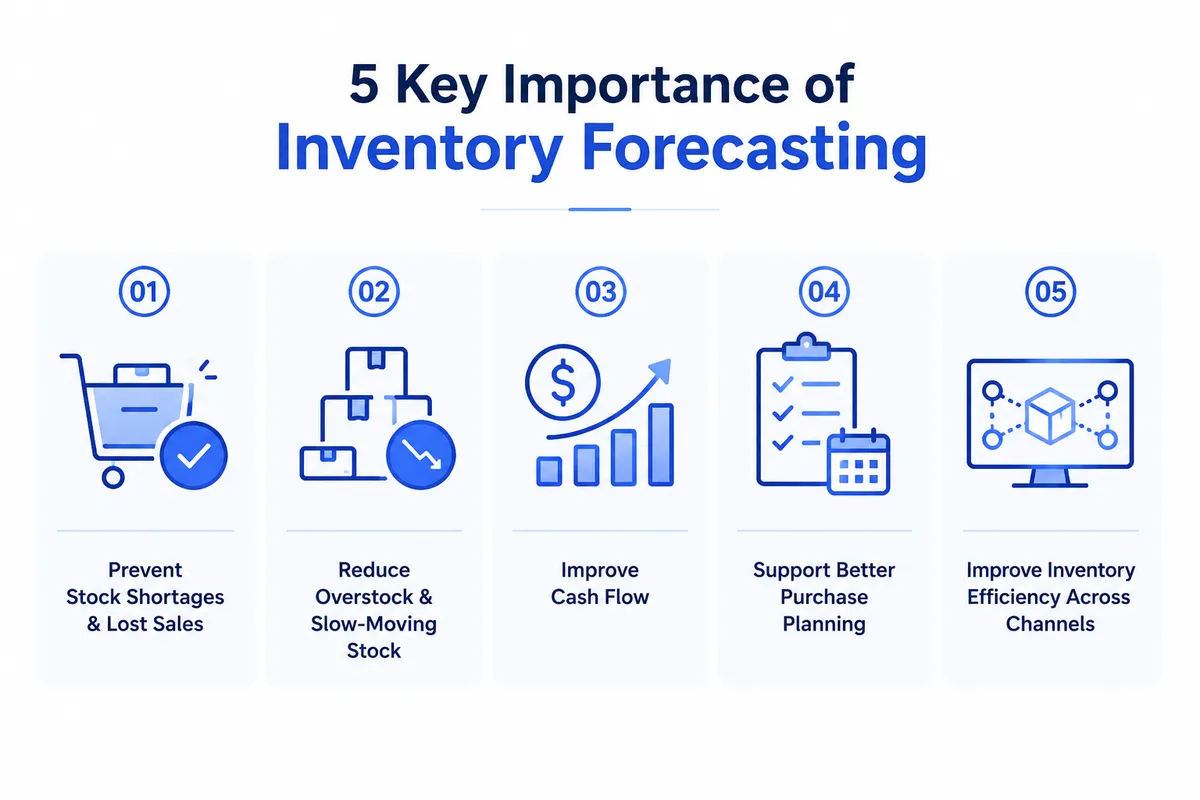
Inventory forecasting helps businesses decide how much stock to prepare based on sales trends and customer demand. Without it businesses often rely on guesswork, which can lead to stock shortages or overstocking. This affects sales performance cash flow and overall business stability.
5 Key Importance of Inventory Forecasting
1. Prevent stock shortages and lost sales
When demand is not predicted properly, businesses may run out of popular products during peak periods. This leads to missed sales and customers switching to other sellers. Forecasting helps ensure enough stock is prepared in advance.
2. Reduce overstock and slow-moving stock
Without forecasting businesses may order too much inventory that does not sell quickly. Some products may stay in the warehouse for a long time, especially seasonal items. Forecasting helps reduce excess stock and avoids dead inventory.
3. Improve cash flow
Too much inventory means money is locked in unsold products. This reduces available cash for marketing or new product development. Forecasting helps businesses keep a healthier balance between stock and cash flow.
4. Support better purchase planning
Forecasting helps businesses decide what to buy and when to buy it. This reduces last-minute ordering and helps avoid delays caused by suppliers or long lead times.
5. Improve inventory efficiency across channels
For businesses selling on multiple platforms, inventory can move unevenly. Forecasting helps keep stock balanced across channels and reduces the risk of one channel running out while another has excess stock.
Why Inventory Forecasting Becomes Difficult ?
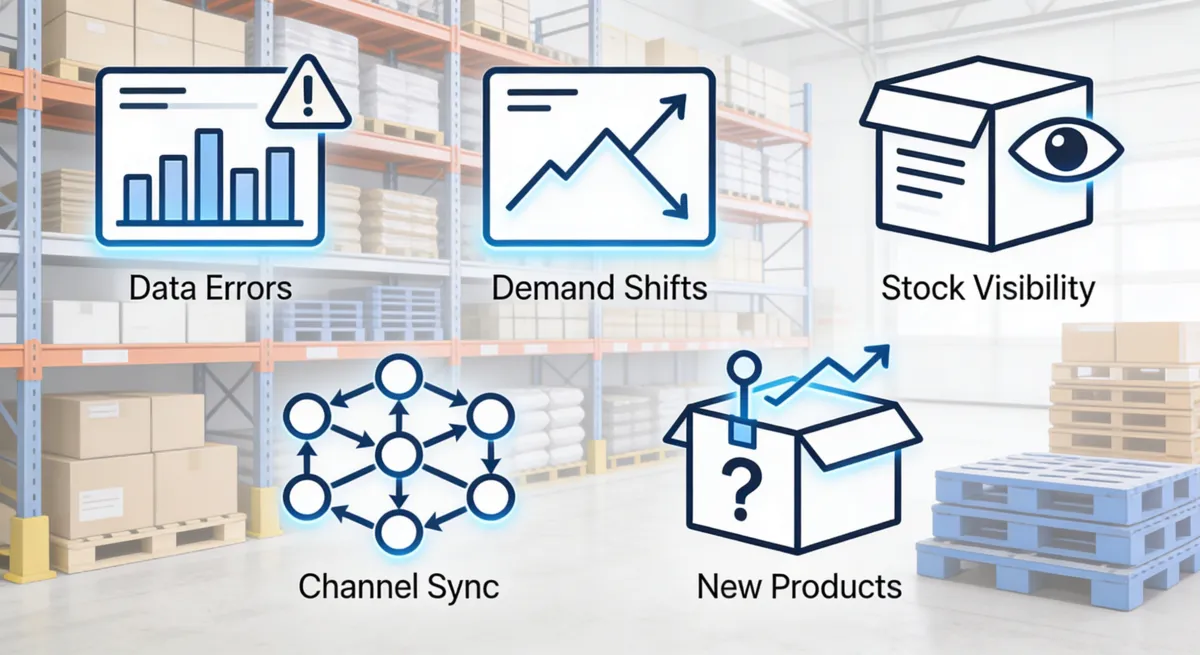
Even though inventory forecasting is important for business planning, many companies still struggle to get it right. The main reason is that forecasting depends on multiple factors such as data accuracy, market changes, and operational efficiency. When these are not managed well, forecasting becomes difficult and unreliable.
1. Poor data accuracy and tracking
Inventory forecasting relies on clean and updated data. If sales records or stock levels are not recorded properly, the forecast will not reflect real demand. Many businesses still update inventory manually, which increases the risk of errors and missing information.
2. Fast-changing customer demand
Customer demand is not always stable. Trends, promotions and competitor actions can change buying behavior quickly. When demand shifts suddenly, it becomes difficult to rely on past data to predict future sales accurately.
3. Lack of real-time inventory visibility
Some businesses do not have real-time access to their stock data. This makes it hard to know what is selling fast and what is slowing down. Without real-time visibility forecasting becomes less responsive to actual market conditions.
4. Multiple sales channels complexity
Businesses that sell on marketplaces, webstores and social media often face inconsistent stock updates. When inventory is not synced properly across channels, it becomes difficult to calculate accurate stock levels and future demand.
5. Unpredictable new product performance
New products do not have historical sales data, which makes forecasting more challenging. Businesses often struggle to estimate demand and may end up with too much or too little stock during product launches.
How SiteGiant ERP Helps Solve These Challenges ?

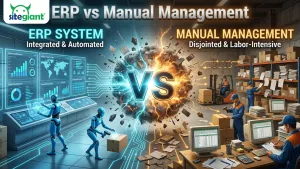
SiteGiant ERP helps businesses solve inventory forecasting challenges by connecting sales, inventory, and order data into one system. Instead of relying on manual tracking or scattered spreadsheets, businesses can work with real-time data that reflects actual demand across all channels. This creates a stronger foundation for forecasting, planning, and purchasing decisions.
7 Key Ways SiteGiant ERP Helps Improve Inventory Forecasting
1. Real-time inventory and sales data
SiteGiant ERP automatically syncs inventory and sales data across multiple channels, including marketplaces, webstores, and social commerce platforms. Stock levels are updated in real time, which reduces mismatches between platforms. With a clear and unified view of inventory, businesses can respond faster to demand changes.
2. Safety stock and lead time setup
Businesses can define safety stock and lead time for each product directly in the system. Safety stock acts as a buffer during unexpected demand spikes, while lead time helps estimate how early replenishment should be placed. Together, these settings help businesses avoid last-minute stock issues and improve planning accuracy.
3. Automated forecasting calculation
The system uses processed and completed order data to calculate daily sales rates based on a selected sales period. It also considers available stock and stock on purchase orders to estimate how long current inventory can last. Products that may run low are automatically highlighted so businesses can replenish stock earlier and avoid shortages.
4. Purchase order generation
SiteGiant ERP can automatically suggest replenishment quantities based on safety stock, sales speed, and lead time. Instead of manually calculating SKU by SKU, businesses can generate purchase orders with prefilled recommendations. This reduces human error and makes the purchasing process much faster and more consistent.
5. Multi-channel and FBS integration
SiteGiant ERP consolidates data from multiple channels such as Shopee, Lazada, webstore, and FBS orders. Rather than analyzing each channel separately, businesses get a complete view of total demand. This helps prevent situations where one channel runs out of stock while another still has inventory available.
6. Item Performance Report
The Item Performance Report allows businesses to compare product sales performance across two selected time periods and identify sales trends. It displays the top 100 selling items based on the selected date range. This report helps support better forecasting and inventory planning by showing real product performance across channels.
7. Stock Sync Rules and Reserved Stock
Stock Sync Rules allow businesses to control how much stock is pushed to different sales channels by setting custom percentages and virtual stock levels. Reserved stock helps keep part of the inventory aside to avoid overselling and support different channel strategies. This helps reduce the risk of overselling and supports better stock allocation across different channels.
A simple way to understand this is:
Sellable Stock = Total Stock - Reserved Stock
Stock Synced to Sales Channel = Sellable Stock × Sync Percentage + Virtual Stock
This helps businesses manage stock more safely across multiple channels, especially during campaigns or high-demand periods.
Frequently Asked Questions (FAQ)
What is inventory forecasting?
Inventory forecasting is the process of predicting future stock demand based on sales data customer behavior and inventory trends. It helps businesses prepare the right amount of stock to avoid shortages or overstocking.
Why is inventory forecasting important?
Inventory forecasting helps businesses improve stock planning reduce excess inventory prevent stock shortages and maintain healthier cash flow. It also supports better purchasing decisions and smoother business operations.
How often should businesses update inventory forecasts?
Inventory forecasts should be updated regularly especially during peak seasons promotions or periods of changing demand. Many eCommerce businesses review forecasts weekly or monthly to maintain accurate stock planning.
Can small businesses benefit from inventory forecasting?
Yes. Inventory forecasting is useful for businesses of all sizes. Small businesses can reduce unnecessary inventory costs improve cash flow and make better purchasing decisions with more accurate forecasting.
What tools can help improve inventory forecasting?
Inventory management systems and forecasting software can help businesses track sales trends monitor stock movement and improve forecasting accuracy. Automated systems also reduce manual work and inventory errors.
Conclusion
Many businesses are able to bring strong traffic to their webstores but still lose sales at the final step. Customers often drop off when inventory information is unclear, when stock availability is inaccurate, or when the overall shopping experience does not feel reliable. These issues usually come from gaps in operations rather than a lack of demand.
SiteGiant ERP helps businesses solve these challenges through one connected system that integrates inventory, sales, and forecasting in real time. It gives businesses clearer visibility across all channels, reduces manual errors, and supports more accurate inventory forecasting and replenishment decisions as demand changes.
Contact SiteGiant today for a FREE consultation and see how your inventory management and webstore performance can be improved for better efficiency and more consistent conversions.