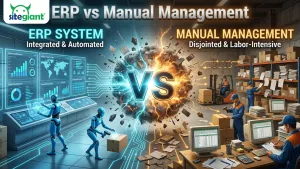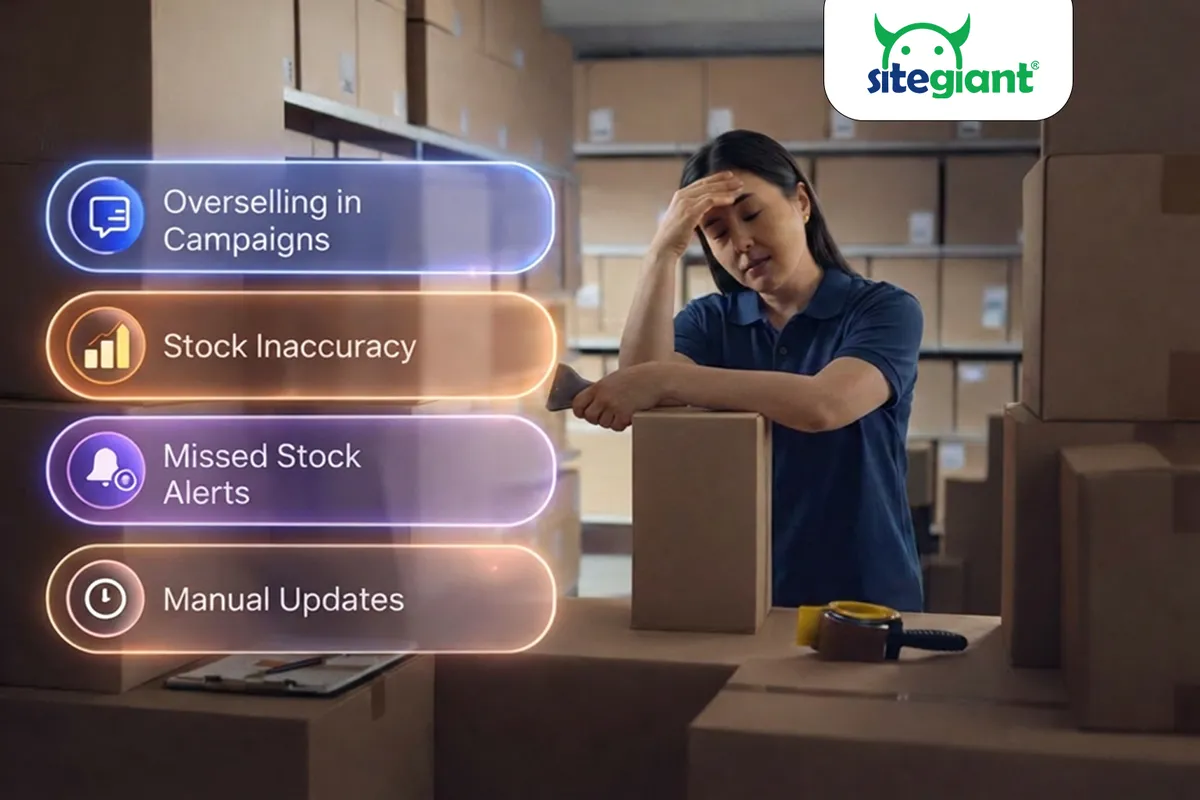
As eCommerce businesses expand across multiple sales channels, managing inventory efficiently becomes increasingly complex. Without the right system in place, even small errors can quickly escalate into major operational issues that affect both revenue and customer experience.
Many eCommerce businesses struggle with:
- Overselling due to inaccurate stock updates
- Overstocking caused by poor demand forecasting
- Manual inventory tracking using spreadsheets
- Difficulty managing inventory across multiple platforms
- Lack of real-time visibility into stock levels
- Order fulfillment errors that affect customer satisfaction
- Inefficient warehouse coordination
- Disconnected systems that cause messy data
- Limited reporting for data-driven decision-making
- Challenges in scaling operations efficiently
To overcome these challenges, businesses are turning to ERP solutions. In this article, we’ll explore 10 key signs that indicate your eCommerce business needs an ERP for inventory management and how the right system can support sustainable growth.
What is ERP for Inventory Management?

An ERP (Enterprise Resource Planning) for inventory management is a centralized system that connects inventory, orders, warehouses, procurement, and sales channels into a single platform. Instead of managing stock through multiple tools or spreadsheets, businesses can control everything from one unified system.
With real-time inventory synchronization and automation, an ERP ensures that stock levels are always accurate across all sales channels. It also provides full visibility and data insights, enabling businesses to make faster decisions, reduce errors, and operate more efficiently as they scale.
6 Benefits of an ERP for Inventory Management
1. Real-Time Inventory Visibility
Businesses gain instant access to accurate stock levels across all sales channels and warehouse locations. With real-time inventory sync, every transaction is updated immediately, allowing teams to respond faster to orders, avoid stock discrepancies, and make informed decisions without second-guessing their data.
2. Improved Accuracy and Reduced Errors
By automating inventory updates and reducing manual data entry, an ERP system minimizes human errors that often lead to stock mismatches. This ensures consistency between system records and physical inventory, helping businesses maintain reliable data and avoid costly fulfillment mistakes.
3. Multi-Channel Synchronization
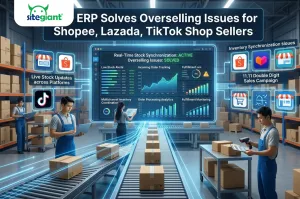
An ERP system automatically updates inventory across all connected platforms, such as Shopee, Lazada, TikTok Shop, and webstores. This eliminates the need for manual updates and ensures that stock levels remain consistent everywhere, preventing overselling and improving operational efficiency.
4. Operational Efficiency Through Automation
Repetitive tasks such as stock updates, order processing, and report generation are automated within the system. This reduces the workload on your team, saves time, and allows them to focus on higher-value activities such as marketing, customer experience, and business growth.
5. Better Demand Forecasting
With access to historical sales data and real-time analytics, businesses can better understand product performance and customer demand. This enables more accurate inventory planning, helping to reduce excess stock while ensuring high-demand items are always available.
6. Scalability for Business Growth
As your business grows, managing inventory manually becomes increasingly difficult. An ERP system is designed to scale your operations, allowing you to handle more products, orders, and sales channels without increasing complexity or operational strain.
10 Signs Your eCommerce Business Needs an ERP for Inventory Management

1.The “Double-Selling” Nightmare
During peak sales like 5.5, 6.6, or 7.7, a campaign goes live, and orders start coming in rapidly across Shopee, Lazada, TikTok Shop, and your webstore. At first, everything looks great until you realize the same product has been sold multiple times because your inventory is not updated in real time. Your team is forced to pause operations, manually check stock, cancel orders, and respond to frustrated customers.
This disrupts fulfillment during critical sales periods and begins to affect customer trust and seller performance. Frequent overselling signals that your current system lacks real-time inventory synchronization.
2. “Ghost Inventory” That Doesn’t Exist in the Warehouse
Your system shows available stock, but when your warehouse team checks, the items cannot be found. Orders are delayed while staff search for missing products or try to reconcile discrepancies between the system and actual stock.
This mismatch creates confusion across teams and reduces operational efficiency. Over time, unreliable inventory tracking makes it difficult to plan accurately, leading to ongoing disruptions in fulfillment and stock management.
3. Stuck in “Spreadsheet Hell” Every Single Day
Inventory is managed through spreadsheets, with multiple files being updated manually across different teams. As order volume increases, updates fall behind, and errors become more frequent, especially during busy periods such as Chinese New Year campaigns or 11.11 sales
This leads to duplicated work, time-consuming reconciliation, and a higher risk of mistakes. Heavy reliance on manual inventory tracking limits productivity and makes it difficult for the business to scale efficiently.
4. Multichannel Chaos Across Shopee, Lazada, and Webstore
Each time a product is sold, your team needs to manually update stock across multiple platforms. Managing inventory across different seller centers becomes a repetitive and time-consuming daily task.
Without proper multichannel inventory management, inconsistencies between platforms are unavoidable. As your business expands into more channels, maintaining accurate stock becomes increasingly difficult and inefficient.
5. The Visibility Gap Between System and Actual Stock
Your team frequently needs to double-check whether items are actually available before confirming orders. Uncertainty around stock levels slows down operations and affects response time.
A lack of real-time inventory visibility makes it difficult to operate confidently. Without a clear and centralized view of inventory, businesses struggle to manage stock effectively and respond quickly to demand.
6. When Fulfillment Errors Start Becoming the Norm
Customers begin receiving incorrect items, incomplete orders, or delayed shipments. These issues occur more frequently as order volume increases and systems fail to stay aligned during festive seasons such as Chinese New Year, Christmas, or Hari Raya.
Fulfillment errors often result from inaccurate inventory data or poor synchronization between systems. As these issues become more common, they start affecting overall operational performance and customer experience.
7. Warehouse Operations That Feel Like “Hide and Seek”
Warehouse teams struggle to locate items, manage stock movement, and coordinate across different storage locations. Processes become slower and less efficient as operations grow. Without proper warehouse management support, picking and packing processes are harder to control. This leads to delays, inefficiencies, and increased operational complexity over time.
8. Disconnected Systems That Never Seem to Align
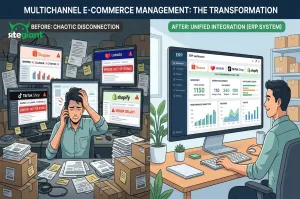
Inventory, orders, and sales data are stored in separate systems that do not communicate with each other. Teams must manually transfer data between platforms to keep records updated. This leads to messy data and increases the risk of inconsistencies. Disconnected systems reduce visibility and make it harder to manage operations smoothly as the business grows.
9. Flying Blind on Inventory and Restocking Decisions
Inventory decisions are made based on assumptions rather than accurate data. Businesses struggle to identify fast-moving products or anticipate demand effectively.
Without proper reporting and analytics, planning becomes reactive instead of strategic. This limits the ability to optimize stock levels and support business growth.
10. When Growth Starts Breaking the Current System
As the business scales, managing inventory becomes more complex. Increased order volume, product variety, and sales channels put pressure on existing processes.
What once worked for a smaller operation becomes inefficient and difficult to manage. This signals that the current system is no longer sufficient to support continued growth.
The Hidden Costs of Manual Inventory Management

While these inventory challenges may seem like daily operational issues, their real impact often goes unnoticed. Over time, they translate into hidden costs that directly affect profitability, efficiency, and long-term growth.
These are not just operational inconveniences—they represent measurable losses that accumulate as your business scales.
1. Cash Flow Locked in Unsellable or Misallocated Inventory
Capital is tied up in slow-moving or misplaced stock, reducing liquidity. This limits your ability to invest in high-demand products, marketing, or expansion opportunities.
2. Rising Labor Costs from Repetitive, Low-Value Manual Work
More time and manpower are required to handle manual tasks such as stock updates and reconciliation. As the business grows, labor costs increase without a corresponding increase in efficiency.
3. Missed Sales Opportunities During Peak Demand Periods
High-demand periods present the biggest revenue opportunities. Without accurate and synchronized inventory, potential sales are lost at the most critical moments.
4. Increased Return and Refund Costs from Preventable Fulfillment Mistakes
Operational mistakes lead to additional handling, reverse logistics, and customer service costs. These expenses reduce overall profit margins.
5. Delayed Decision-Making Due to Lack of Reliable Inventory Insights
Without reliable data, decisions are delayed or made with uncertainty. This affects purchasing, pricing, and inventory planning, ultimately slowing business growth.
How to Choose the Right ERP for Inventory Management ?

Before selecting an ERP system, it’s important to understand what actually matters in day-to-day operations. Not all systems are built for growing eCommerce businesses; some may offer basic features, but lack the capabilities needed to support multiple sales channels, real-time updates, and scaling operations.
When selecting an ERP system, consider the following factors:
- Ease of Use: A clean, intuitive interface with a clear dashboard makes it easy to track inventory, update stock, and manage orders without confusion or training.
- Integration Capabilities: Seamless connectivity with eCommerce platforms and marketplaces like Shopee, Lazada, TikTok shop, and webstores, so orders and inventory are automatically synced.
- Scalability and Flexibility: Able to handle increasing order volume, product SKUs, and additional sales channels without slowing down operations.
- Automation Features: Automates repetitive tasks such as stock updates, order syncing, and inventory adjustments, reducing manual workload and errors.
- Real-Time Inventory Synchronization: Instantly updates stock levels across all channels when a sale is made, preventing overselling and stock discrepancies.
- Multi-Warehouse Support: Provides visibility and control over stock across different warehouses or retail outlets, including stock transfers and allocation.
- Cost-Effectiveness and ROI: Delivers value by reducing labor costs, minimizing errors, and improving operational efficiency over time.
- Reliable Customer Support: Offers responsive local support for onboarding, troubleshooting, and system guidance when issues arise.
- Reporting and Analytics: Provides clear reports and dashboards showing fast-moving items, low stock levels, and sales trends for better decision-making.
What Makes SiteGiant ERP the Best Solution for Inventory Management?
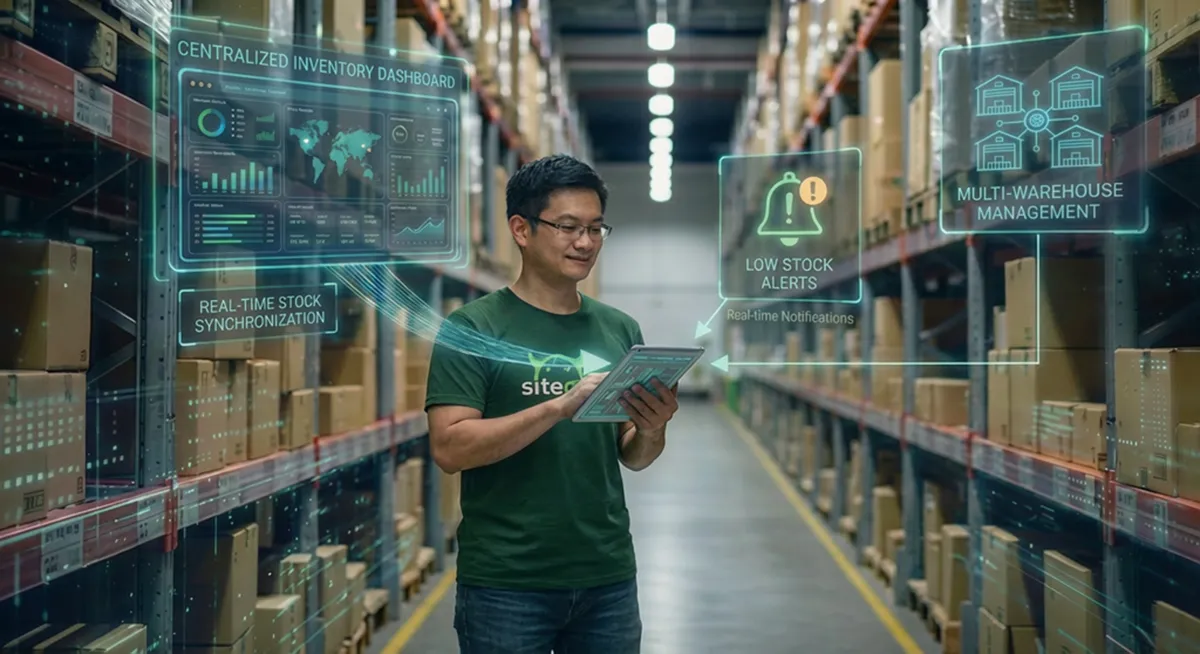
SiteGiant ERP is built specifically for modern eCommerce businesses, designed to solve real inventory challenges faced by growing SMEs. By combining automation, real-time synchronization, and centralized control, it helps businesses streamline operations and manage inventory more efficiently as they scale.
Key Features & Capabilities
1. Real-Time Multichannel Inventory Synchronization
SiteGiant updates inventory instantly across Shopee, Lazada, TikTok Shop, and webstores after every transaction. This ensures stock accuracy across all channels, even during high-volume selling periods.
2. Zero-Error Fulfillment with OFA (Order Fulfillment Assistant)
The OFA app turns mobile devices or PDAs into guided picking tools with optimized warehouse routes. Barcode scanning verifies every item before packing, reducing picking errors during peak order volumes.
3. Centralized Inventory Dashboard
Each order is automatically recorded with photo or video proof during the packing process, linked directly to the order ID. This creates a permanent visual record for dispute resolution and internal accountability
4. Virtual Bundling & SKU Mapping
Bundle promotions are automatically broken down into individual SKUs when sold. For example, a “Skincare Starter Kit” containing a cleanser and toner will automatically deduct stock from each individual item while still being sold as one bundle listing.
5. Smart Stock Monitoring & Restock Automation
Inventory thresholds trigger real-time alerts when stock levels fall below safe limits. Users can generate purchase orders directly to suppliers to prevent stockouts on fast-moving products.
6. Multi-Warehouse Management
SiteGiant enables centralized control of inventory across multiple warehouses in different locations. Stock can be allocated, transferred, and monitored in real time based on each warehouse’s availability and operational needs.
7. Batch & Expiry Date Tracking
Inventory is tracked by batch and expiry date, making it especially critical for FMCG or beauty products. The system ensures FIFO or FEFO picking is followed, so older stock is always prioritized first to avoid expired or wasted products reaching customers.
8. Analytics and Reports: Provides actionable insights into inventory and sales performance across all channels. Reports include dead stock analysis, master SKU performance reports, and item performance reports.
Success Stories
1. Chek Hup
“We only need one employee to process 300 orders within an hour.”
We have been using SiteGiant for more than 2 years. Before we used SiteGiant, our order fulfillment process was quite time-consuming and complicated. During the campaign days, we couldn’t fulfill our orders on time, and there were a lot of packing errors. After using SiteGiant ERP system, we now only need one employee to process 300 orders within an hour. The reporting tool is one of my most favourable features in SiteGiant ERP system, we can easily generate the reports and get the data from all platforms we sell on.
⭐⭐⭐⭐⭐ 5/5
Mandy Lim
Chek Hup
2. TTF Group
“Real-time inventory sync and bundle kit saved us a lot of time and prevent overselling and boost efficiency”
SiteGiant ERP help cement our position as Malaysia’s leading storage racking supplier by optimizing our online and warehouse operations. The real-time inventory synchronization and Bundle Kit features efficiently manage our complex SKUs, ensuring accurate stock levels and preventing us from overselling.
⭐⭐⭐⭐⭐ 5/5
Mei Wen
TTF Group
Frequently Asked Questions (FAQ)
What is an ERP for inventory management?
An ERP for inventory management is a centralized system that integrates inventory, orders, and operations into one platform. It helps businesses track stock in real time, automate processes, and improve accuracy.
When should an eCommerce business implement an ERP system?
An eCommerce business should consider an ERP when it experiences issues like stock inaccuracies, manual processes, or difficulty managing multiple sales channels.
How does an ERP improve inventory accuracy?
An ERP improves accuracy by syncing inventory in real time, reducing manual data entry, and centralizing all inventory data in one system.
Is an ERP suitable for SMEs?
Yes, modern ERP solutions are designed to be scalable and user-friendly, making them suitable for small and medium-sized eCommerce businesses.
How long does it take to implement an ERP system?
Implementation time varies depending on business complexity, but cloud-based ERP systems can often be set up within days or weeks.
Conclusion
Scaling an eCommerce business in Singapore is a major milestone, but growth shouldn’t come at the cost of operational chaos. From running out of stock during a 11.11 campaign to overselling on Shopee due to delayed stock updates, or spending hours reconciling inventory across Shopee, Lazada, TikTok Shop, and your webstore, these are clear signs that your current system is no longer enough.
SiteGiant ERP serves as the centralized control for your operations, connecting sales channels, warehouses, and inventory into one seamless system. Instead of manually updating stock after every order or switching between multiple seller centers, businesses can automate inventory synchronization, reduce costly errors, and gain real-time visibility across all channels.
Don’t wait for the next mega sale to expose system limitations. Take control of your inventory, protect your seller ratings, and free up time to focus on marketing, campaigns, and growth with a solution built for modern eCommerce.