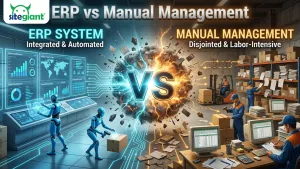
Managing multiple e-commerce platforms like Shopee, Lazada, TikTok Shop, and Shopify separately can quickly become chaotic and time-consuming for growing online sellers. As businesses expand across multiple sales channels, handling inventory, orders, and fulfillment manually often creates operational inefficiencies that slow down daily workflows.
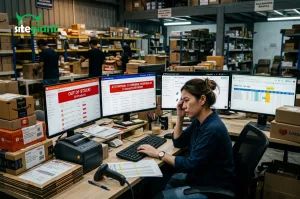
Without a centralized system, many multichannel sellers commonly face challenges such as:
- Inventory mismatch across different platforms
- Overselling due to delayed stock updates
- Manual order processing from multiple dashboards
- High risk of human error in fulfillment
- Difficulty tracking real-time business performance
- Lack of centralized control for multichannel sales
This is where an ERP (Enterprise Resource Planning) system becomes essential. By centralizing operations, automating workflows, and synchronizing sales channels into one connected platform, ERP helps e-commerce businesses improve efficiency, reduce manual work, and scale their operations more effectively.
What is an ERP System in E-Commerce?

An ERP (Enterprise Resource Planning) system in e-commerce is a centralized platform that helps businesses connect sales channels, inventory, orders, and logistics into one unified system. Instead of managing multiple platforms separately, sellers can monitor and control daily operations through a single dashboard, making workflows more organized and efficient.
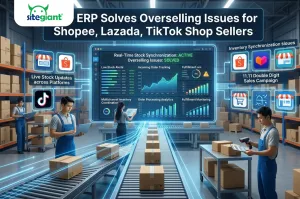
One of the biggest advantages of an ERP system is real-time inventory synchronization across different platforms such as Shopee, Lazada, TikTok Shop, and Shopify. Whenever stock changes or orders are placed, the system automatically updates inventory across connected channels, helping businesses reduce overselling and inventory inconsistencies.
In addition, ERP systems help automate order processing and centralize business reporting into one platform. By reducing manual tasks and providing better visibility into sales and operational performance, businesses can improve efficiency, make faster decisions, and scale their multi-channel operations more effectively.
Why Multichannel Sellers Struggle Without ERP System?

Managing multiple e-commerce platforms without a centralized system can become increasingly difficult as businesses grow. When operations are handled manually across multiple sales channels, sellers often face inefficiencies that affect inventory accuracy, fulfillment speed, and overall business performance.
- Separate platform management — Sellers need to manage Shopee, Lazada, TikTok Shop, and Shopify separately, making daily operations more time-consuming and difficult to organize.
- Inventory fragmentation — Stock quantities are not updated instantly across all platforms, leading to inventory inconsistencies and overselling risks.
- Operational inefficiency — Too much manual work is required to manage orders, inventory, and fulfillment between different platforms.
- Scaling limitations — As order volume increases, managing operations manually becomes harder and less sustainable for business growth.
- Customer experience issues — Delays, order cancellations, and stock inaccuracies can negatively affect customer satisfaction and seller performance.
- Order processing issue — Orders from multiple platforms need to be processed manually, increasing the chances of delayed fulfillment and shipping mistakes.
- Product listing issue — Product details, pricing, and stock information must be updated separately across each platform, creating repetitive work and higher risk of human error.
Without an ERP system, these operational challenges can continue to grow as businesses expand into more sales channels. A centralized ERP solution helps businesses streamline workflows, improve inventory visibility, and manage multi-channel operations more efficiently from one platform.
How ERP System Connects Shopee, Lazada, TikTok Shop, and Shopify?

An ERP system helps businesses centralize and automate multichannel operations by connecting platforms like Shopee, Lazada, TikTok Shop, and Shopify into one unified platform. Instead of managing each sales channel separately, sellers can handle orders, inventory, products, and reporting more efficiently through a centralized system.
1. Centralized Order Management
A centralized ERP system allows businesses to manage orders from multiple sales channels within one dashboard, helping reduce manual work and improve fulfillment efficiency.
- No need to log in to multiple dashboards separately
- Faster order processing and fulfillment workflows
- Filter and manage orders based on courier provider, sales channel, or SKU
2. Real-Time Inventory Synchronization
Inventory synchronization helps businesses maintain accurate stock levels across all connected platforms in real time, reducing inventory-related issues.
- Stock updates automatically across all connected platforms
- Prevents overselling and stock discrepancies
- Live inventory visibility for better decision-making
- Automatically deducts inventory for bundle products
3. Unified Product Management
ERP systems simplify product management by allowing sellers to control product information centrally across multiple channels.
- One product listing can be synchronized across all platforms
- Easy updates for pricing, descriptions, and stock quantities
- Reduces repetitive manual work and duplicate updates
4. Centralized Reporting Dashboard
A centralized reporting dashboard gives businesses better visibility into overall sales performance and operational trends.
- Combined sales data from multiple platforms in one dashboard
- Easier performance comparison between different sales channels
- Better forecasting and business planning
- Identify which SKUs are performing well and which require improvement
5. Improved Warehouse Efficiency (Optional WMS Integration)
When integrated with a Warehouse Management System (WMS), ERP can further improve warehouse operations and fulfillment accuracy.
- Supports paperless stock-in processes
- Removes manually assigned picking tasks
- Optimizes pick-pack-ship workflows
- Reduces human errors during fulfillment operations
By integrating multiple e-commerce platforms into one centralized system, ERP helps businesses improve efficiency, reduce operational complexity, and scale multi-channel operations more effectively.
Do You Need an ERP System for Your E-Commerce Business?

As e-commerce businesses grow across multiple sales channels, managing daily operations manually can become increasingly challenging. Many sellers only realize they need an ERP system when inventory issues, fulfillment delays, and operational inefficiencies begin affecting business performance and customer experience.
- Managing multiple platforms becomes difficult — Handling operations separately across Shopee, Lazada, TikTok Shop, and Shopify can become time-consuming and difficult to organize efficiently.
- Inventory is often inaccurate across channels — Stock quantities may not update consistently across different platforms, increasing the risk of inventory mismatches and overselling.
- Order volume is increasing rapidly — As daily orders grow, manual processing and fulfillment workflows can slow down operations and create delivery delays.
- Your business still relies on Excel and manual updates — Managing inventory and orders manually through spreadsheets becomes less efficient and harder to maintain as the business scales.
- Frequent fulfillment and warehouse errors occur — Overselling, shipping mistakes, and warehouse inaccuracies can negatively impact customer satisfaction and overall operational performance.
If your business is experiencing these challenges, it may be a strong sign that an ERP system is needed to centralize operations, automate workflows, and support long-term business growth more efficiently.
Benefits of Using ERP System for Singaporean E-Commerce Sellers

E-commerce businesses in Singapore are increasingly adopting ERP systems to improve efficiency and support multichannel growth. By centralizing operations and automating key workflows, an ERP system helps sellers manage daily business activities more smoothly and effectively.
- Faster operational workflow — Processes such as order handling, inventory updates, and fulfillment become quicker and more streamlined.
- Reduced manual workload — Automation reduces the need for repetitive manual tasks across platforms like Shopee, Lazada, TikTok Shop, and Shopify.
- Higher order accuracy — Automated order processing helps reduce human errors in picking, packing, and shipping.
- Better inventory control — Real-time stock synchronization improves inventory visibility and reduces overselling risks.
- Scalable multichannel business model — Businesses can expand to more sales channels without increasing operational complexity.
- Improved customer satisfaction — Faster delivery and fewer order mistakes lead to a better overall customer experience.
- Stronger cash flow management — Better inventory and order visibility helps businesses plan and manage cash flow more effectively.
Frequently Asked Questions (FAQ)
What is an ERP system for e-commerce?
An ERP (Enterprise Resource Planning) system is a centralized platform that helps businesses manage inventory, orders, fulfillment, and multiple sales channels in one place. It allows e-commerce sellers to streamline operations and improve workflow efficiency across platforms.
How does ERP help synchronize inventory across different platforms?
An ERP system automatically updates inventory quantities across connected sales channels whenever an order is placed or stock changes occur. This helps reduce stock discrepancies and minimizes the risk of overselling.
Is ERP suitable for small and medium-sized businesses (SMEs)?
Yes. ERP systems are not only for large enterprises. Many SMEs use ERP solutions to improve efficiency, centralize operations, and prepare their businesses for future growth as order volumes increase.
What problems can ERP solve in e-commerce operations?
ERP systems help solve common issues such as overselling, inventory mismatches, delayed order fulfillment, manual data entry errors, and lack of centralized control across multiple platforms.
Conclusion
Managing multiple e-commerce platforms separately can quickly become challenging as businesses grow. Handling orders, inventory, and fulfillment manually across Shopee, Lazada, TikTok Shop, and Shopify often leads to stock inconsistencies, fulfillment delays, and inefficient workflows that affect overall business performance.
This is where Sitegiant ERP System helps Singaporean e-commerce sellers centralize multichannel operations into one connected platform. With features such as real-time inventory synchronization, centralized order processing, and workflow automation, businesses can reduce manual tasks while improving efficiency and order accuracy across different sales channels.
In addition, Sitegiant ERP System is designed to support growing businesses that require better scalability and visibility across daily operations. The platform helps sellers monitor inventory more effectively, streamline fulfillment processes, and reduce overselling risks and warehouse errors as order volumes continue to increase.
As e-commerce competition continues to grow in Singapore, businesses that adopt integrated solutions will be better positioned to scale efficiently and manage operations with greater control. A centralized ERP solution not only improves productivity but also helps sellers build a stronger foundation for sustainable multichannel business growth.