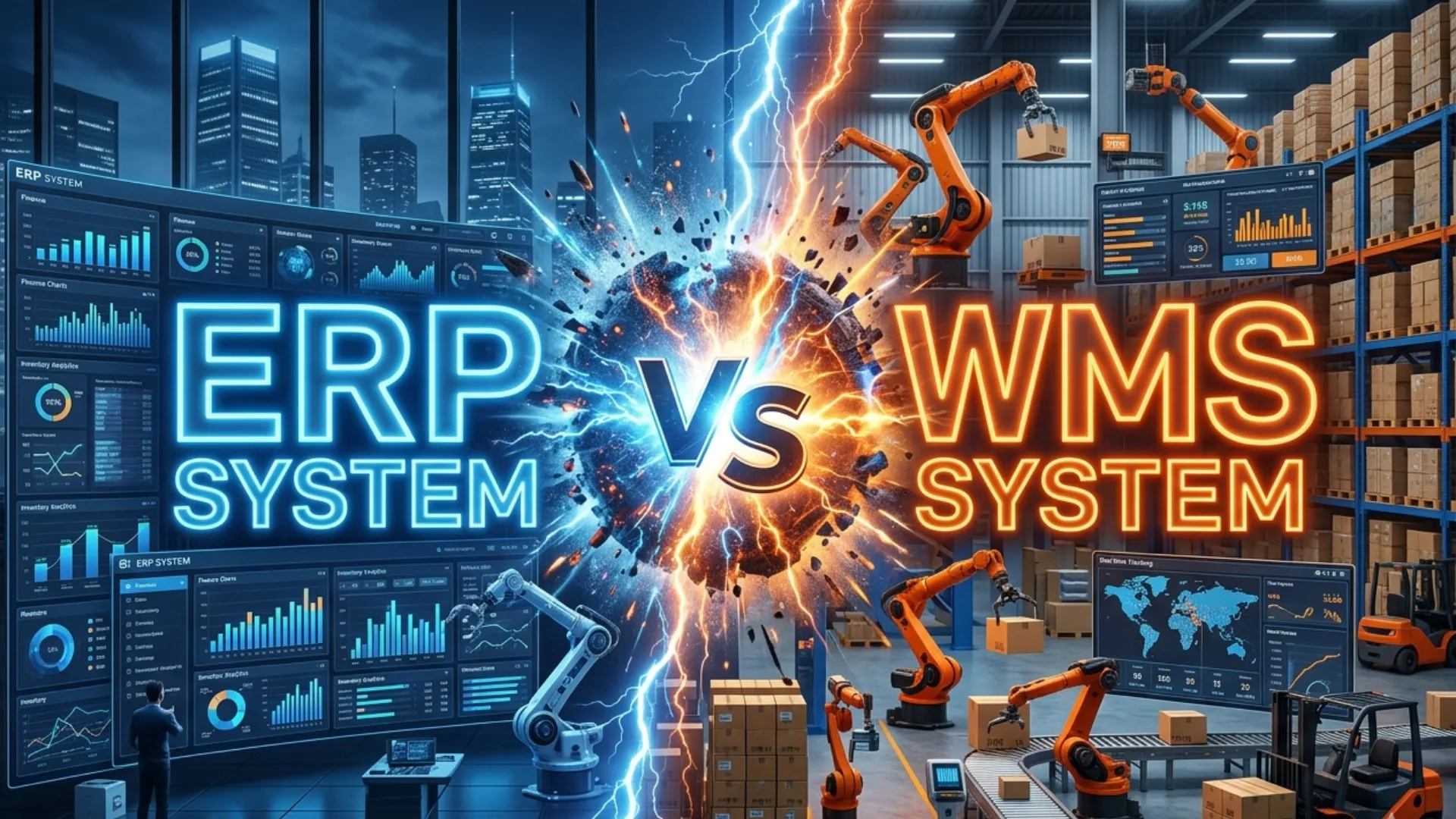
Running an eCommerce business across multiple platforms like Shopee, Lazada, TikTok Shop, and even webstores requires more than just manual tracking and spreadsheets. As online competition continues to grow in Singapore, sellers are no longer dealing with just simple order processing — they are now managing high order volumes, multiple sales channels, fast customer expectations, and constantly changing inventory levels. Without a proper system in place, even small operational mistakes can quickly turn into bigger problems that affect sales performance and customer satisfaction.
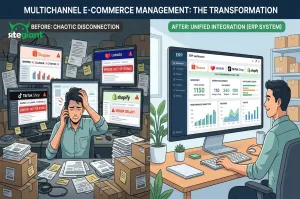
As your orders grow, managing everything manually becomes harder and more complex.
- Many sellers struggle with overselling because their inventory is not updated in real time across different sales channels, leading to customer complaints and order cancellations.
- Manual stock updates between marketplaces often cause human errors, resulting in inaccurate inventory records and operational confusion.
- Order fulfillment becomes slow and inefficient when warehouse processes are not properly systemized or connected to a centralized platform.
- Business owners find it difficult to track overall performance because sales, inventory, and financial data are scattered across different systems.
- Warehouse teams often face miscommunication issues because they are using separate tools that are not integrated with the sales or accounting system.
- As order volume increases, many sellers realize that their current manual processes are no longer scalable and start experiencing operational bottlenecks.
This is where understanding the difference between an eCommerce Warehouse Management System (WMS) and an ERP system becomes important. Choosing the right system can help you automate operations, reduce human error, and improve overall business efficiency. It also allows you to gain better visibility over your inventory, orders, and performance across multiple sales channels. With the right system in place, you can scale your eCommerce business more smoothly without being limited by manual processes.
What is an ERP System ?
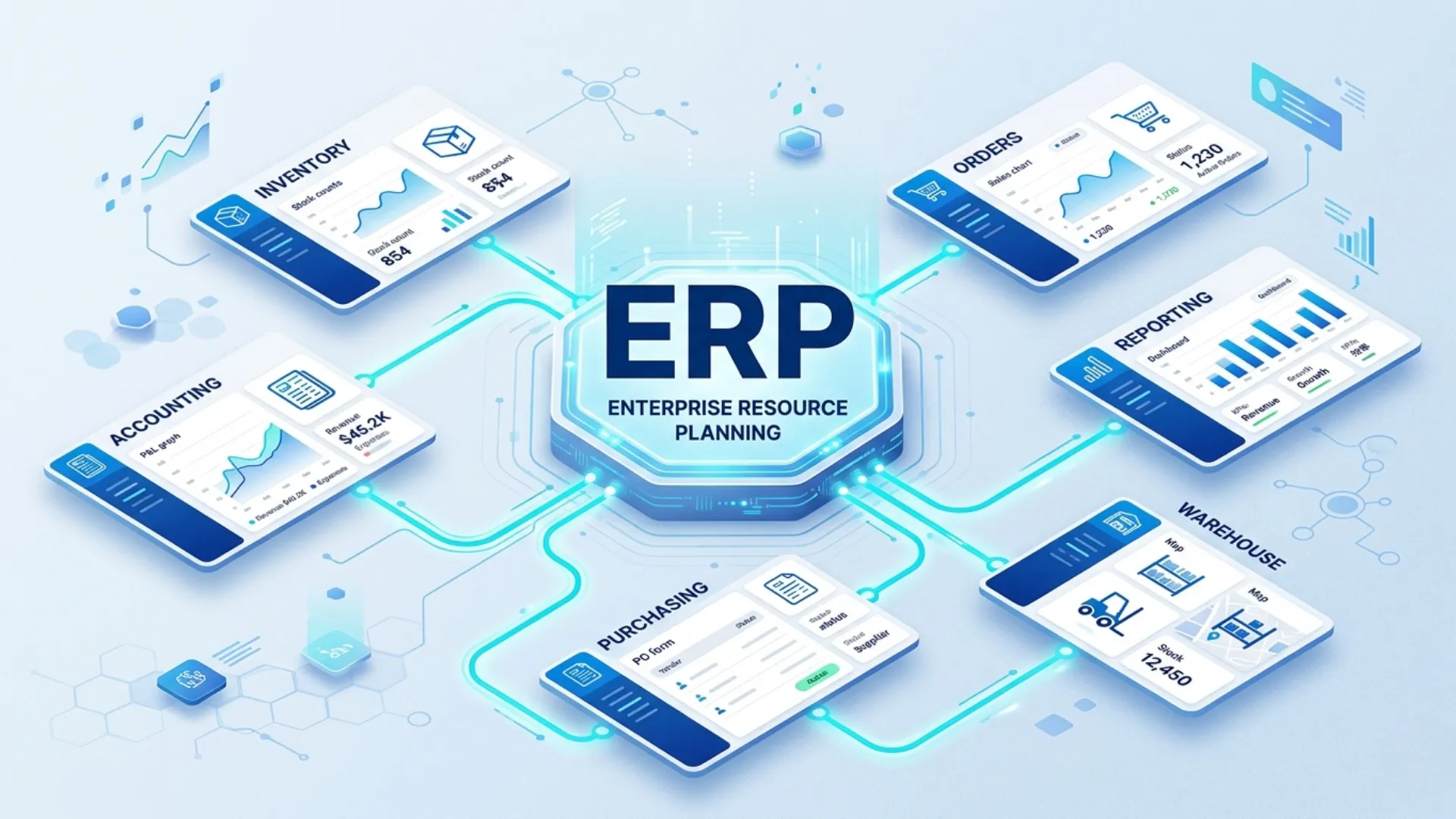
ERP stands for Enterprise Resource Planning. It is a centralized system designed to manage full eCommerce operations within a single platform. It connects product management, order processing, inventory control, customer data, payments & logistics, and accounting into one unified system. By centralizing all business operations, it eliminates the need to switch between multiple platforms and tools.
ERP also centralizes data from multiple sales channels, allowing businesses to have a complete overview of their operations in one place. It enables real-time data syncing across all connected platforms to ensure accuracy in inventory and order management. This reduces manual work and operational errors while improving overall efficiency. In addition, ERP supports automation for key business processes, helping sellers manage growth more effectively.
What is a Warehouse Management System (WMS)?
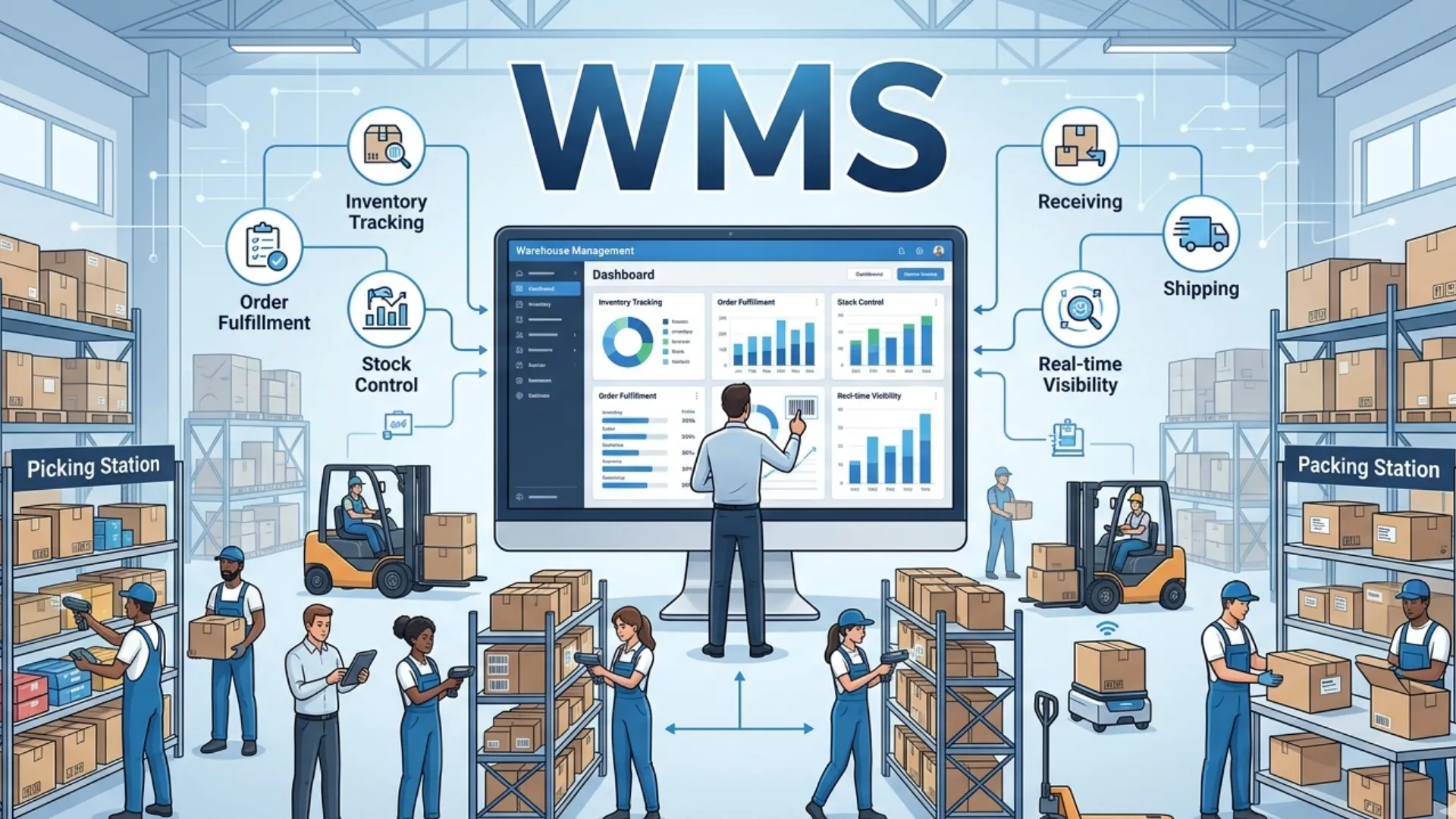
A Warehouse Management System (WMS) is a system designed to manage warehouse operations, including inbound, outbound, and return processes. These processes play an important role in ensuring inventory accuracy, improving fulfillment speed, and delivering a better overall customer experience. By standardizing warehouse workflows, WMS helps businesses reduce errors and operate more efficiently, especially when handling high order volumes.
- Inbound process: This involves receiving new stock from suppliers, carefully verifying the quantity and condition of all incoming items, and systematically organizing products into the correct storage locations within the warehouse to ensure accurate inventory records and easy retrieval when needed.
- Outbound process: This involves processing customer orders by picking the correct items from storage, sorting them according to order or delivery requirements, securely packing the products to prevent damage during shipping, and preparing all shipments for dispatch to ensure fast, accurate, and timely delivery.
- Return process: This involves handling returned orders from customers, inspecting the returned products to assess their condition, updating the inventory system to reflect returned stock, and managing refunds or replacements in an efficient and organized manner to maintain customer satisfaction.
The Difference Between ERP System And WMS
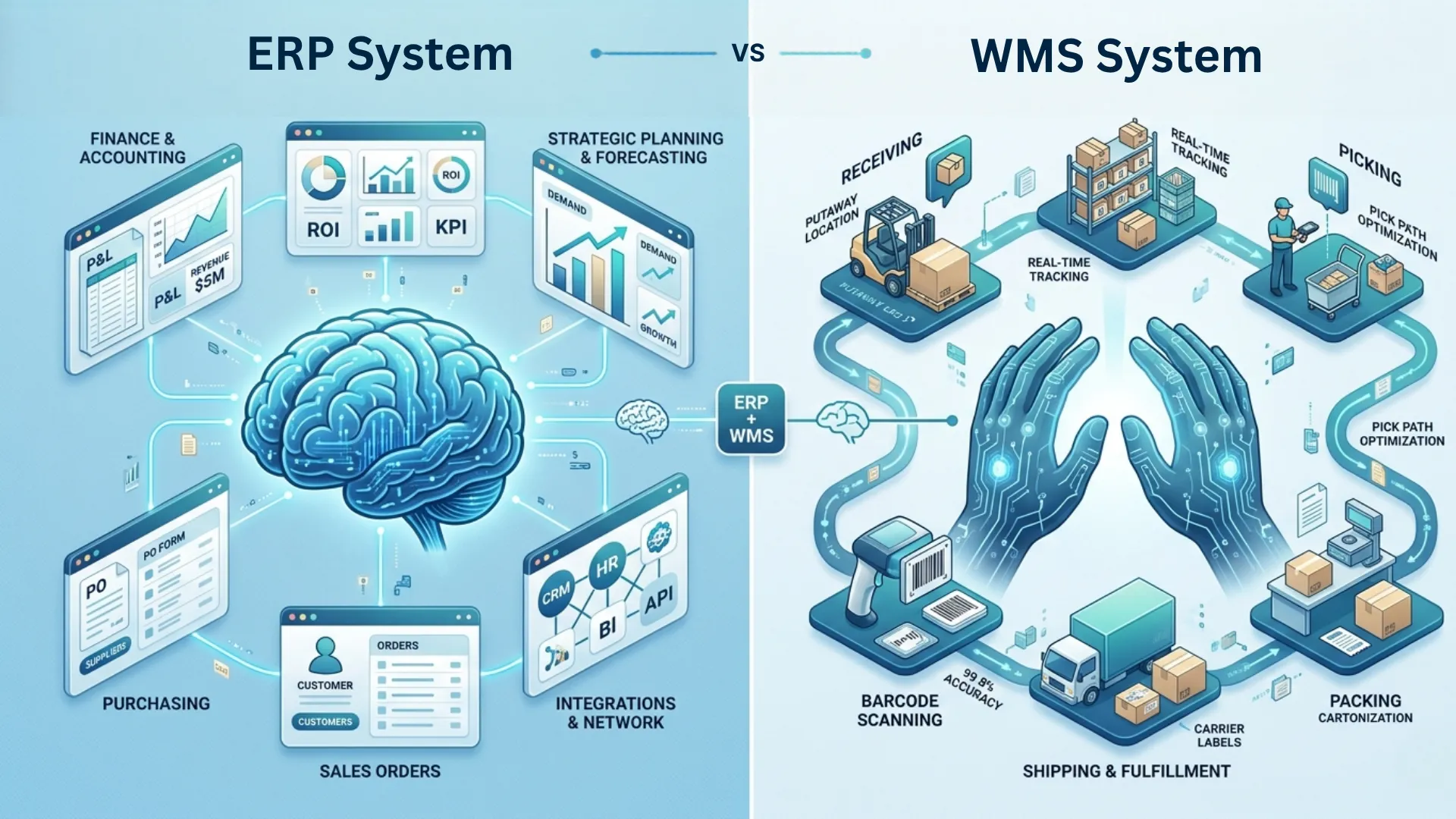
Aspect | ERP System | WMS System |
Business Scope | Full eCommerce business management | Warehouse operations only |
Order Flow | From sales to finance integration | From picking to shipping only |
System Integration | Marketplace, accounting, POS system | Warehouse tools, barcode systems |
Automation Type | Business-wide automation | Warehouse process automation |
Users | Owners, managers, finance, operations | Warehouse staff, pickers, packers |
Goal | Business growth & scalability | Fulfillment speed & accuracy |
Problem Solved | Overselling, poor visibility, manual data | Picking errors, slow fulfillment |
Common Problems Without ERP & WMS
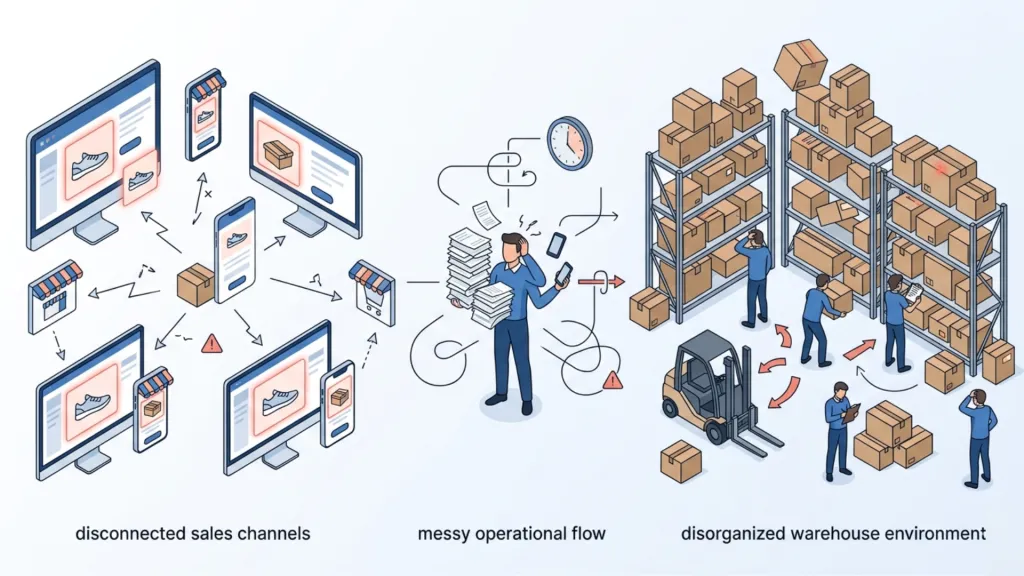
Without ERP and WMS systems, eCommerce businesses often face operational inefficiencies that affect both sales performance and customer satisfaction. As order volume increases, these problems become more obvious and harder to manage manually. This is why many sellers eventually struggle to scale their business effectively.
- Overselling and inventory mismatches happen when stock is not synced in real time across multiple sales channels, leading to order cancellations and poor customer experience.
- Manual product updates and lack of centralized control cause inconsistent inventory records and increase the risk of human errors across different platforms.
- Slow order processing and fulfillment delays occur when there is no system to streamline and coordinate warehouse and sales operations efficiently.
- Warehouse inefficiency, including picking errors and poor organization, happens when there is no structured workflow or system guidance for staff.
- Wrong item fulfillment and high return rates increase when warehouse operations rely heavily on manual processes without proper verification tools.
- High operational costs and limited scalability occur because businesses need more manpower to handle repetitive tasks during high-order periods.
- Lack of real-time business visibility makes it difficult for owners to track inventory, sales performance, and overall business health accurately.
Overall, these challenges show how manual processes and disconnected systems can slow down growth and reduce efficiency in eCommerce operations. Implementing proper systems like ERP and WMS helps businesses gain better control, improve accuracy, and scale more effectively.
Do You Need WMS or ERP?
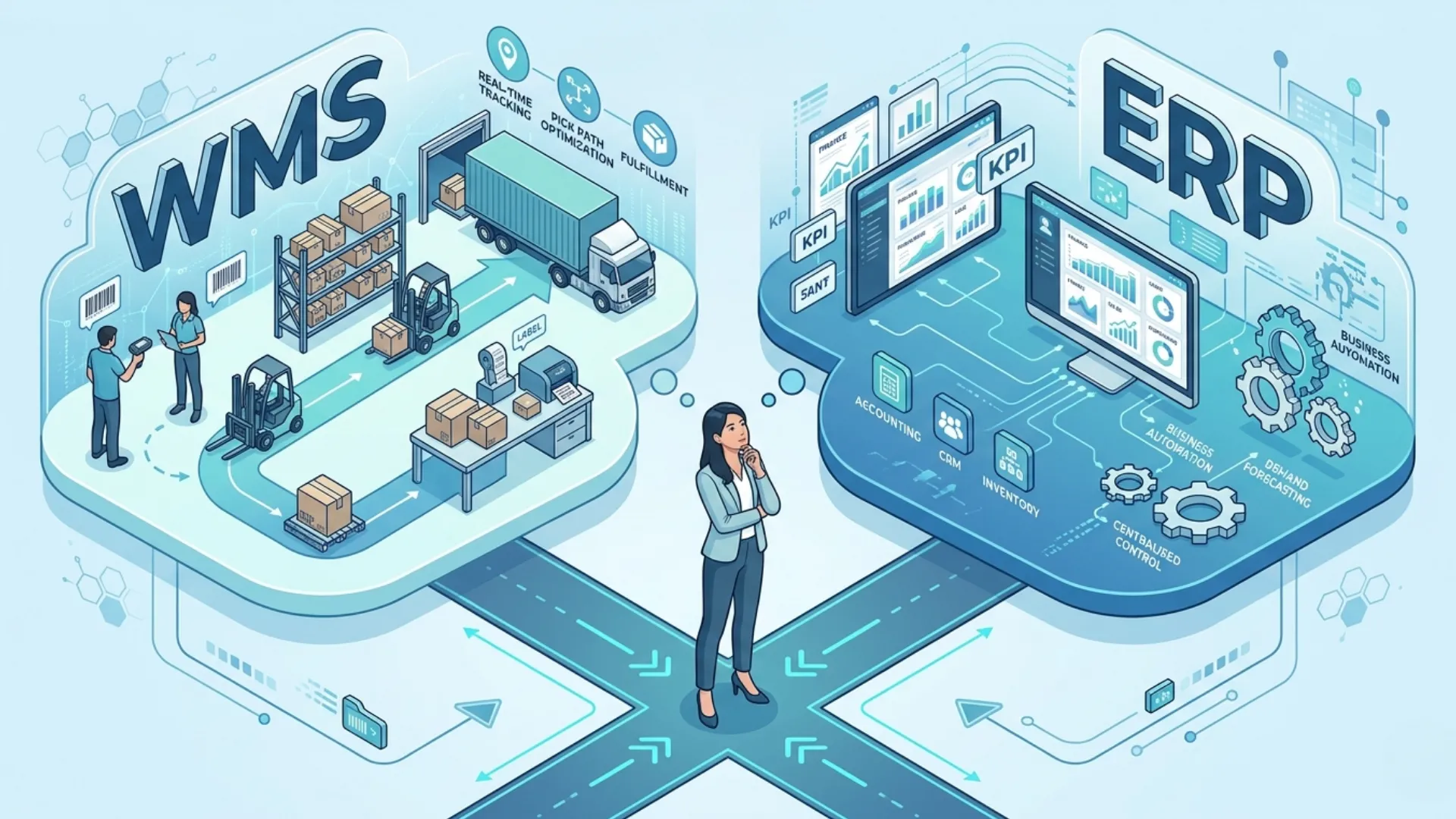
Not every eCommerce business needs both systems — it depends on the challenges you are trying to solve and the stage your business is in. The right solution often comes down to whether your biggest pain points are in warehouse operations or overall business management.
You may need a WMS if:
- Frequent picking and packing errors affect order accuracy and customer satisfaction.
- Manual fulfillment processes slow down operations and making it difficult to handle growing order volume.
- Your warehouse team is expanding and requires a more structured workflow to improve efficiency.
- Managing a high number of SKUs has made inventory organization and fulfillment more complex.
- You want to improve warehouse productivity, fulfillment speed, and operational accuracy is your main priority.
You may need an ERP if:
- You are selling across multiple platforms and need centralized control over products, orders, and inventory.
- Inventory inconsistencies across channels are causing overselling or operational confusion.
- There is limited visibility into stock movement, costs, and overall business performance.
- Your operations rely on multiple disconnected tools and need better automation.
- The business is scaling beyond spreadsheets and manual processes and requires a more structured system.
Can WMS and ERP Work Together?
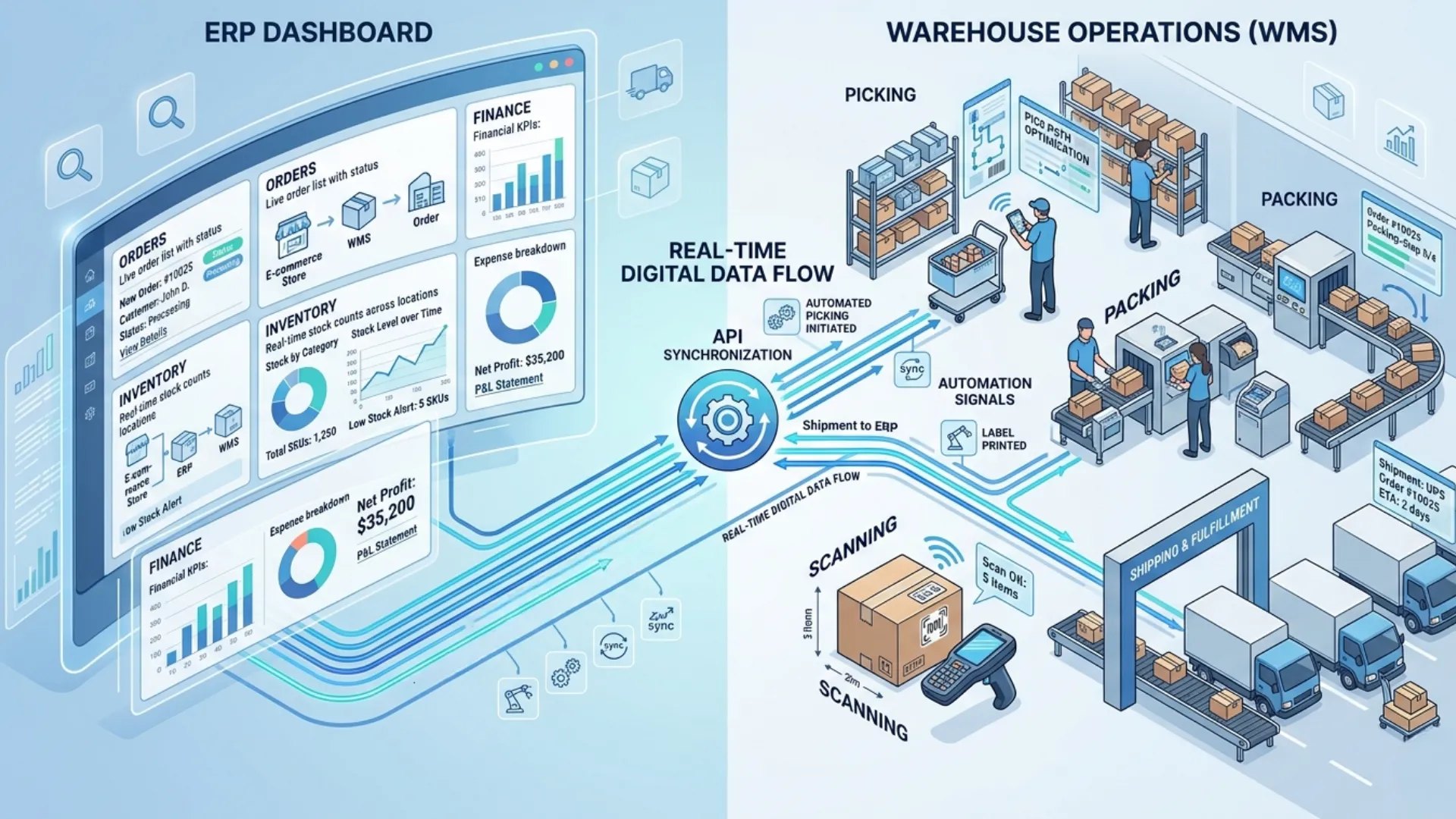
Yes — and in many cases, they should. Rather than replacing one another, ERP and WMS can work together to give businesses better control over both overall operations and warehouse execution. When integrated properly, they can improve efficiency, data accuracy, and fulfillment performance across the entire business.
ERP with Built-in WMS Features
Some modern ERP systems, like SiteGiant, come with built-in warehouse management features, making it possible to manage both ERP and WMS functions in one integrated system. This setup can be ideal for businesses that want the benefits of warehouse management without managing multiple disconnected systems.
- Paperless stock receiving using PDA or smartphone devices helps improve receiving accuracy and reduce manual paperwork.
- Wave shipment management supports batch order processing to speed up fulfillment during high order volume periods.
- Scan-and-pick workflows using PDA or smartphone devices improve picking accuracy and reduce fulfillment errors.
- System-based warehouse task assignment helps organize staff workflows and improve warehouse productivity.
- Quality control checks before packing and shipping help ensure the right items are fulfilled correctly.
- Built-in order return management supports smoother handling of returns, inventory updates, and replacement processes.
- Having one integrated system reduces the need to switch between multiple tools while enabling faster data syncing between ERP and warehouse operations.
How to Choose the Right System?
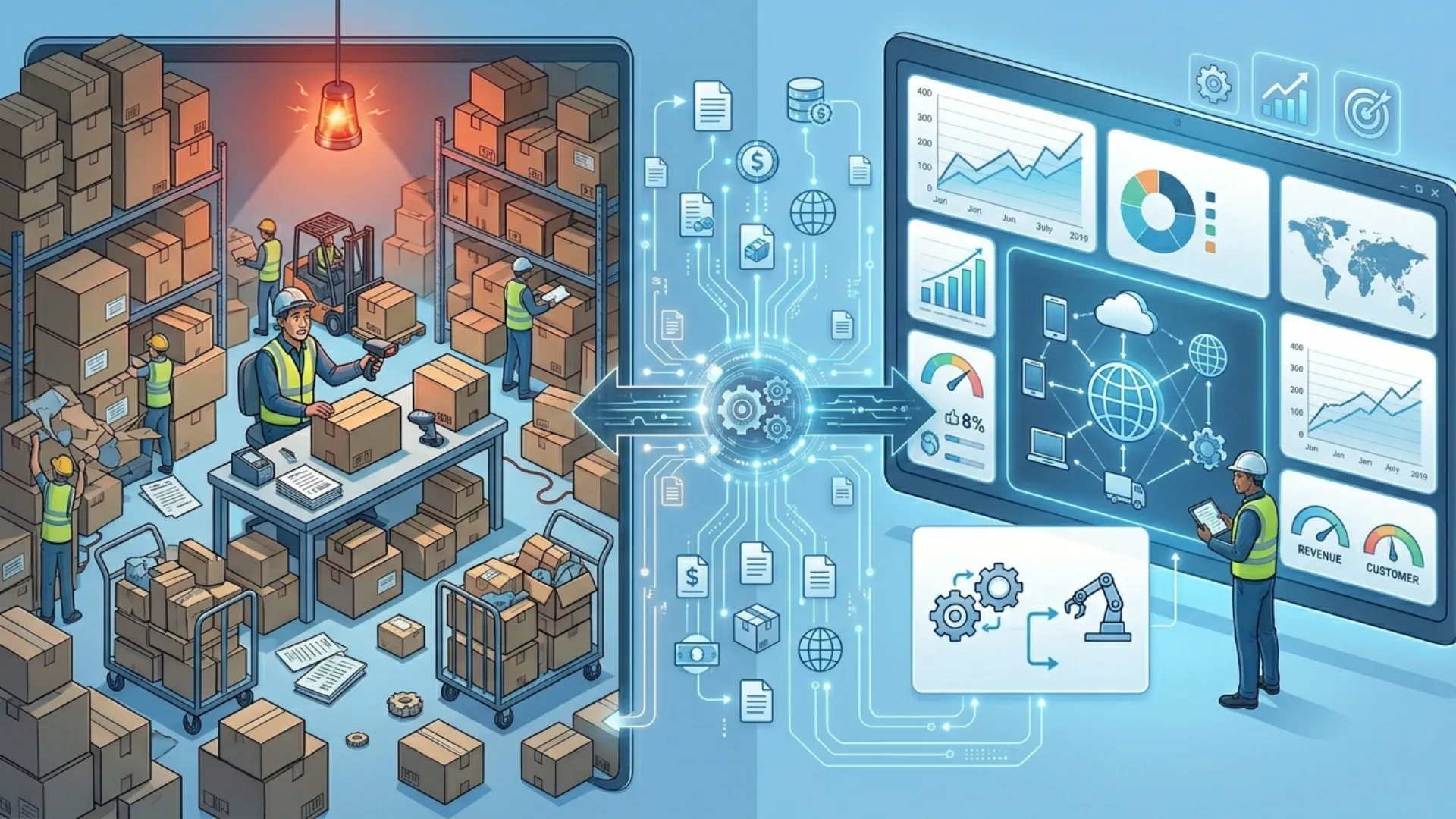
1. Where is your biggest bottleneck?
- If your biggest challenge is warehouse chaos, such as slow picking, packing errors, or fulfillment delays, a WMS may be the better fit to improve warehouse efficiency.
- If your main issue is inventory control, order management, or disconnected operations across multiple channels, an ERP may be more suitable for centralizing and automating your business processes.
2. How complex is your business?
- If you operate a single sales channel with low SKU volume, basic tools may still be sufficient for your current operational needs.
- If you manage multiple channels and high order volume, an ERP becomes much more important for maintaining centralized control and supporting business growth.
3. Do you want one system or multiple integrations?
Ultimately, the right choice depends on where your business is today and where you plan to grow. By identifying your biggest bottlenecks and operational needs, you can choose a system that supports both immediate efficiency and long-term scalability.
Frequently Asked Questions (FAQ)
When should you use an ERP system and a WMS?
You should use an ERP system when you need to manage multi-channel sales, inventory, and overall business operations in one centralized platform. A WMS system is more suitable when your main focus is improving warehouse efficiency, such as faster picking, packing, and handling high order volumes.
Can WMS and ERP systems work together?
Yes, WMS system and ERP systems can work together through integration to create a more complete solution. The ERP system manages overall business operations, while the WMS system handles warehouse processes, allowing both systems to sync data and improve efficiency.
Do small eCommerce businesses need an ERP system?
Yes. Small businesses may use ERP system to streamline their daily ecommerce operations in product listing, order fulfillment and inventory management.
What is the main difference between ERP and WMS?
The main difference is that the ERP system manages the entire business operations, while WMS system focuses only on warehouse processes. ERP system provides a full overview of your business, whereas WMS improves fulfillment accuracy and speed.
How does ERP help with inventory management?
ERP system helps with inventory management by syncing stock levels across multiple sales channels in real time, ensuring that all platforms reflect accurate quantities. This reduces the risk of overselling, improves stock visibility, and allows sellers to make better decisions on restocking and inventory planning.
Conclusion
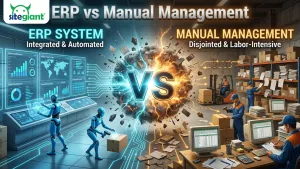
Understanding the difference between ERP system and WMS system is essential for any eCommerce business looking to improve efficiency and scale operations. While both systems play an important role, they serve different purposes within your business. ERP system focuses on managing your entire business ecosystem, while WMS system is designed to optimize your warehouse operations and fulfillment process.
For most growing eCommerce sellers in Singapore, an ERP system is often the first step to gaining control over multi-channel operations such as Shopee, Lazada, and TikTok Shop. It helps centralize product, order, and inventory management, allowing you to reduce manual work and improve overall business visibility.
As your business continues to grow and order volume increases, adding a WMS system can further enhance your warehouse efficiency. With features like barcode scanning, optimized picking workflows, and real-time warehouse tracking, a WMS system ensures faster and more accurate order fulfillment.
This is where solutions like SiteGiant come into play. Instead of forcing you to choose between ERP and WMS, SiteGiant bridges both worlds by offering a unified system that connects your sales channels, inventory, and fulfillment processes in one platform. For many SMEs, this eliminates the need to manage multiple disconnected systems while still improving warehouse accuracy and operational flow.
If you are still unsure which solution is right for your business, understanding the key differences between ERP system and WMS system —as explained in this article— can help you make the right decision. With the right system in place, you can streamline operations, reduce errors, and build a scalable eCommerce business for long-term growth.