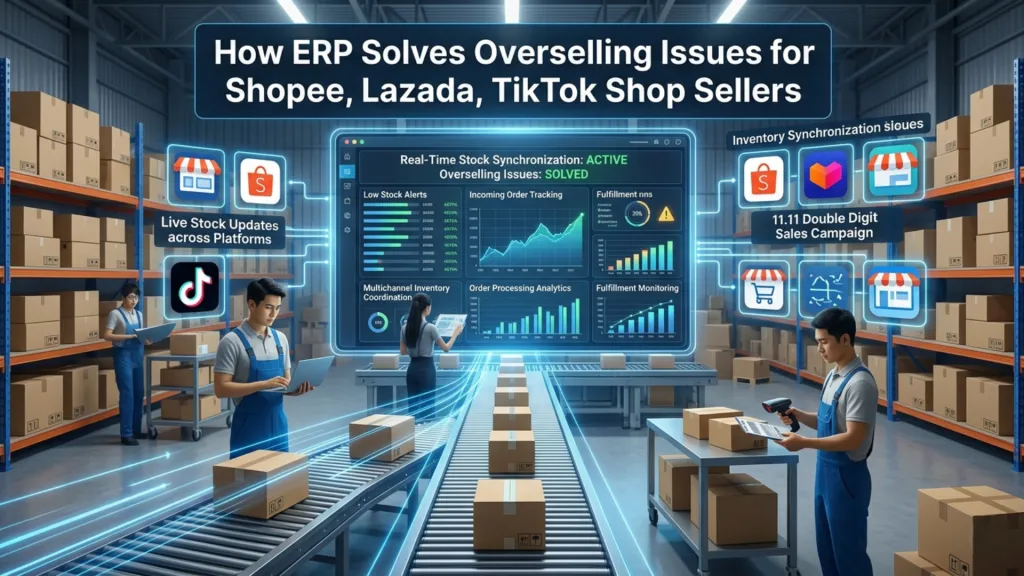
Overselling is one of the most common operational problems faced by ecommerce sellers managing multiple marketplaces simultaneously. As ecommerce businesses expand across Shopee, Lazada, TikTok Shop, webstores, retail stores, and other online sales channels, manually updating stock quantities across every platform becomes increasingly difficult.
During major ecommerce campaigns such as Double Digit Sales, Payday Campaigns, Raya Promotions, and Mega Sales, inventory movement can happen continuously throughout the day. Without proper inventory synchronization, many sellers struggle to update stock quickly enough across all integrated sales channels at the same time.
This often leads to:
- Stock quantity mismatch
- Overselling
- Order cancellations
- Delayed fulfillment
- Customer complaints
- Marketplace penalty risks
- Poor customer experience
As ecommerce operations become more complex, more businesses are adopting ecommerce ERP systems to centralize inventory management and synchronize stock updates across multiple sales channels.
With synchronized inventory updates across integrated channels, sellers can coordinate inventory movement across Shopee, Lazada, TikTok Shop, Zalora, webstores, and POS systems more efficiently. SiteGiant ERP helps ecommerce sellers improve inventory visibility, simplify multichannel coordination, and reduce stock mismatch issues across platforms.
In this article, we will explain why overselling happens, the operational risks caused by manual inventory management, and how ecommerce ERP systems help sellers reduce overselling issues more efficiently.
Why Overselling Happens in Ecommerce Operations?

Overselling happens when sellers receive orders for products that are no longer available in actual inventory. This usually occurs when stock quantities are not updated quickly enough across multiple sales channels.
As ecommerce businesses expand across Shopee, Lazada, TikTok Shop, webstores, and retail stores, inventory coordination becomes increasingly difficult to manage manually. When businesses rely on spreadsheets, disconnected systems, or separate marketplace dashboards, inventory synchronization delays can easily happen during:
- Flash sales
- Campaign promotions
- Livestream sales
- Sudden order spikes
- High traffic periods
The more sales channels a business operates, the harder it becomes to maintain accurate inventory visibility manually.
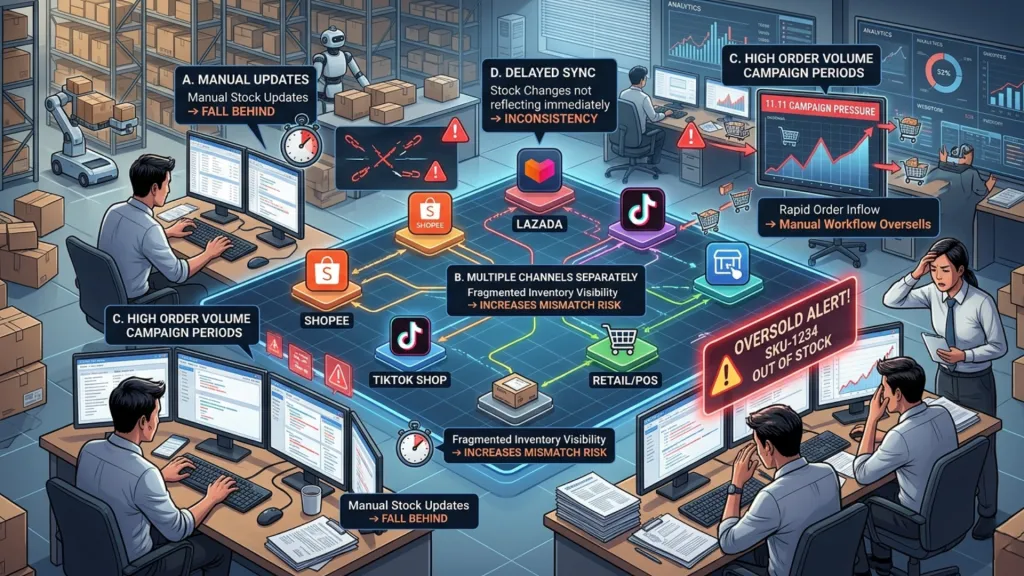
Common Causes of Overselling
1. Manual Causes of Overselling
Many ecommerce sellers still update stock quantities manually across marketplaces. As inventory moves rapidly throughout the day, manual updates can easily fall behind actual stock movement. This creates delays between available inventory and marketplace stock quantities.
2. Multiple Sales Channels Operating Separately
When Shopee, Lazada, TikTok Shop, webstores, retail systems, and POS systems are managed separately, inventory visibility becomes fragmented. Staff may need to switch between multiple systems just to monitor stock quantities. As businesses scale, this increases the risk of inventory mismatch across platforms.
3. High Order Volume During Campaign Periods
During major ecommerce campaigns, inventory movement can happen extremely fast within minutes. Manual workflows often cannot keep up with sudden traffic spikes and rapid order inflow. This makes stock coordination significantly harder during high-volume sales periods.
4. Delayed Inventory Synchronization
Without synchronized inventory updates, stock changes may not reflect immediately across all sales channels. This creates inconsistencies between actual inventory and marketplace stock balance.
5. Poor Inventory Visibility
Many sellers struggle to monitor:
- Available stock
- Reserved inventory
- Incoming orders
- Marketplace stock balance
Across multiple platforms simultaneously. Without clear inventory visibility, businesses may unknowingly continue selling products that are already out of stock.
Effects of Overselling
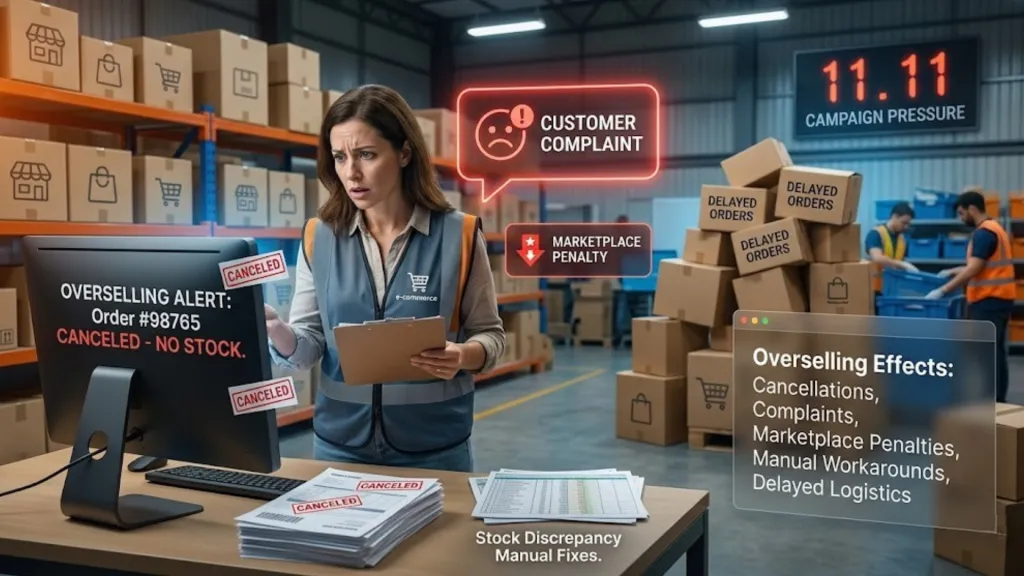
Overselling does not only affect inventory accuracy. It can also create larger operational problems across ecommerce fulfillment and customer management.
1. Order Cancellations
Orders may need to be cancelled when products are no longer available for fulfillment. Frequent cancellations can negatively affect customer trust and overall marketplace performance.
2. Customer Complaints
Customers may become frustrated when paid orders cannot be shipped on time. Repeated overselling incidents can damage buying confidence and affect customer satisfaction.
3. Marketplace Penalty Risks
Frequent order cancellations may negatively affect seller performance metrics on ecommerce marketplaces. This may impact seller ratings, campaign participation eligibility, and overall marketplace reputation.
4. Delayed Fulfillment Coordination
Warehouse and fulfillment teams may spend additional time resolving stock discrepancies manually. This can slow down picking, packing, and shipping workflows.
5. Poor Customer Experience
Customers expect fast and accurate fulfillment. When overselling happens repeatedly, businesses may struggle to maintain a consistent customer experience across multiple sales channels.
How ERP Helps Reduce Overselling Issues

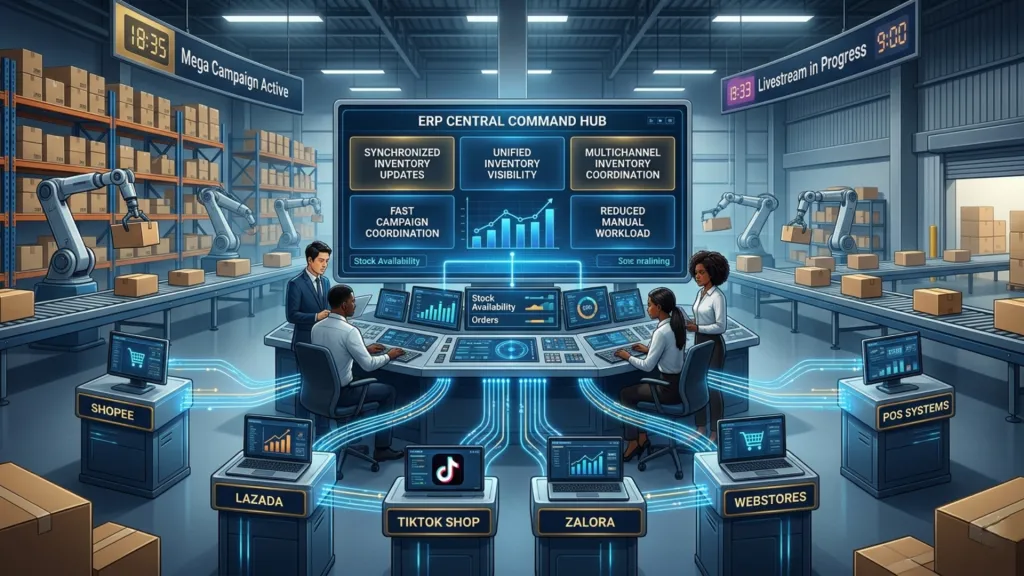
An ecommerce ERP system helps sellers coordinate inventory updates across multiple sales channels through one centralized ecommerce management system. Instead of updating stock manually platform by platform, businesses can manage inventory synchronization more efficiently across marketplaces, webstores, and retail operations.
ERP systems help improve:
- Inventory visibility
- Stock coordination
- Marketplace synchronization
- Order processing efficiency
- Multichannel operational management
This allows ecommerce sellers to reduce operational bottlenecks while maintaining more accurate inventory control.
Key Ways ERP Helps Reduce Overselling
1. Synchronized Inventory Updates Across Integrated Channels
Inventory quantities can be synchronized across:
- Shopee
- Lazada
- TikTok Shop
- Zalora
- Webstores
- POS systems
To improve stock visibility and reduce inventory mismatch issues across multiple sales channels. This helps sellers maintain more accurate inventory updates across integrated channels while reducing overselling risks caused by delayed stock synchronization.
2. Unified Inventory Coordination During Campaigns
Sellers can monitor stock movement, inventory balance, and incoming orders from one dashboard instead of checking multiple systems separately. This makes inventory coordination easier to manage during high-volume sales periods.
3. Faster Inventory Coordination During Campaigns
As inventory changes rapidly during campaigns, synchronized stock updates help businesses coordinate inventory more efficiently across multiple channels.
This becomes especially important during:
- Flash sales
- Mega campaigns
- Livestream promotions
- Payday campaigns
Where inventory movement happens continuously.
4. Better Multichannel Inventory Coordination
Inventory coordination becomes easier when ecommerce marketplaces, retail inventory, webstores, and multiple sales channels are managed through one centralized system. This helps reduce disconnected workflows and repetitive stock checking.
5. Reduced Dependency on Manual Updates
By reducing repetitive manual stock updates, businesses can lower operational workload and reduce human errors caused by delayed inventory coordination.
Why Multichannel Sellers Need Centralized Inventory Management

As ecommerce businesses expand across multiple marketplaces, inventory coordination becomes significantly more complex.
Sellers managing:
- Shopee
- Lazada
- TikTok Shop
- Zalora
- Retail stores
- Webstores
Often struggle to maintain inventory accuracy manually across every platform. Centralized inventory management helps businesses improve:
- Inventory visibility
- Stock synchronization
- Order coordination
- Fulfillment planning
- Marketplace inventory consistency
While reducing repetitive manual inventory checking.
How SiteGiant ERP Helps Reduce Overselling Issues

SiteGiant ERP is designed specifically for ecommerce sellers managing multichannel inventory operations across multiple marketplaces and sales channels. Instead of manually updating inventory platform by platform, SiteGiant ERP helps sellers coordinate inventory synchronization and ecommerce operations through one centralized inventory management system.
Key Features That Help Reduce Overselling
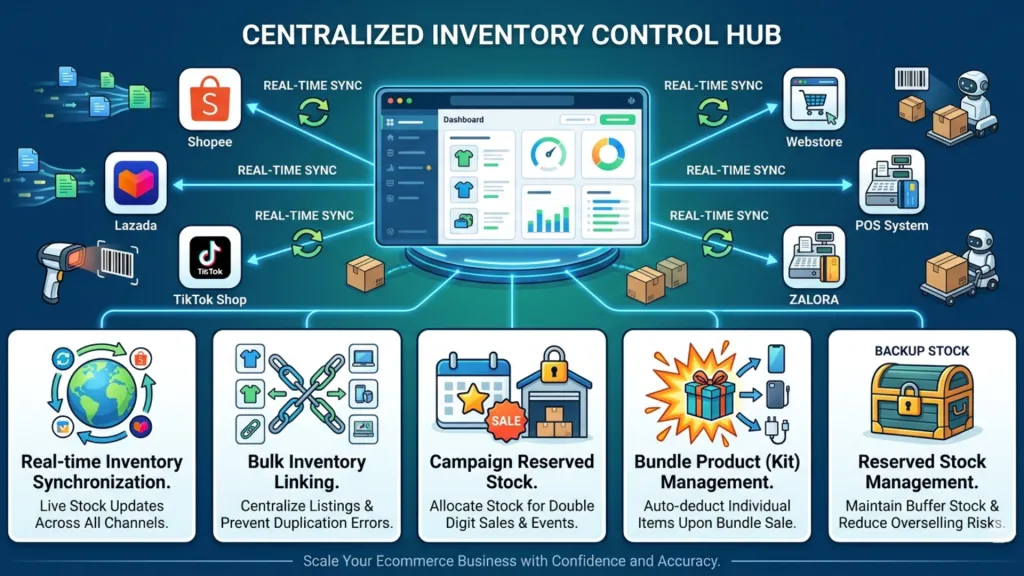
1. Real-time Inventory Synchronization
Synchronize inventory across:
- Shopee
- Lazada
- TikTok Shop
- Zalora
- Webstores
- POS systems
To improve stock visibility and reduce inventory mismatch issues across multiple sales channels. This helps sellers maintain more accurate inventory updates across integrated channels while reducing overselling risks caused by delayed stock synchronization.
2. Bulk Inventory Linking
Sellers managing products with multiple variations or duplicate listings across different marketplaces often face stock synchronization difficulties. With bulk inventory linking, centralized inventory control across all integrated channels helps maintain better stock consistency across platforms.
This helps reduce manual inventory coordination and lowers the risk of overselling caused by disconnected product listings. Businesses managing large product catalogs can also improve stock coordination more efficiently with SiteGiant’s Inventory Management System.
3. Campaign Reserved Stock
During Double Digit Sales, Payday Campaigns, and major ecommerce promotions, sellers may need to reserve stock quantities specifically for campaign periods.
Campaign Reserved Stock helps sellers manage sellable stock quantities more accurately during Double Digit Sales and major ecommerce campaigns to reduce overselling risks. This allows sellers to maintain better control over inventory availability during major campaigns.
4. Bundle Product (Kit) Management
Many ecommerce sellers sell bundle sets or promotional product kits across marketplaces. Without proper inventory coordination, bundle products can easily create stock inconsistencies when individual item quantities are not updated accurately.
Bundle Product (Kit) helps auto-deduct inventory for each individual item whenever a bundle purchase is made. This helps sellers improve inventory accuracy while reducing stock inconsistencies for bundled products. Businesses selling promotional bundles or combo sets can also manage inventory more efficiently with SiteGiant’s Bundle Product Management solution.
5. Reserved Stock Management
Reserved Stock allows sellers to keep a certain quantity of inventory unavailable for sale as backup stock during high-volume sales periods.
This helps reduce overselling risks for fast-selling products during major ecommerce campaigns. Better reserved stock coordination also helps fulfillment teams manage inventory allocation more accurately across multiple sales channels.
As ecommerce businesses continue scaling across multiple platforms, inventory synchronization and stock coordination become increasingly important for reducing operational risks caused by overselling.
Frequently Asked Questions (FAQ)
What causes overselling in ecommerce?
Overselling usually happens when stock quantities are not updated quickly enough across multiple sales channels.
Can ERP reduce overselling issues?
Yes. ERP systems help synchronize inventory across platforms more efficiently, reducing stock mismatch and delayed inventory updates.
Why does overselling happen during campaigns?
Campaign periods create sudden spikes in order volume, causing inventory to move faster than manual stock updates can handle.
Why is multichannel inventory management difficult manually?
Managing Shopee, Lazada, TikTok Shop, webstores, and retail inventory separately increases operational complexity and inventory synchronization delays.
Is ERP suitable for growing ecommerce sellers?
Synchronized inventory management improves inventory visibility and reduces stock inconsistencies across multiple platforms.
Why is manual ecommerce management risky during campaign sales?
Yes. ERP systems help growing ecommerce businesses coordinate inventory, orders, and multichannel operations more efficiently as order volume increases.
Can ERP automatically sync inventory across marketplaces?
Yes. Ecommerce ERP systems help synchronize inventory across multiple marketplaces automatically, reducing delays caused by manual stock updates.
Conclusion
Without synchronized inventory management, sellers often face stock mismatch, overselling, delayed fulfillment, order cancellations, and operational inefficiencies — especially during high volume campaign periods.
That is why more e-commerce sellers are adopting an e-commerce ERP system to improve inventory visibility, simplify multichannel coordination, and reduce stock inconsistencies across multiple sales channels.
With centralized inventory synchronization and connected backend management, SiteGiant ERP helps ecommerce sellers reduce overselling risks while improving inventory coordination across marketplaces and ecommerce operations.