In 2026, a branded webstore has become an essential part of eCommerce strategy as businesses shift their focus beyond traffic generation. While ads, marketplaces, and social media can bring in visitors more easily than before, many brands are realizing that traffic alone does not guarantee sales. The real challenge is turning those visitors into paying customers through a smoother and more reliable shopping experience. This is why more businesses are paying closer attention to how their webstores influence customer decisions and overall sales performance.
Many businesses struggle with:
- High website traffic but low conversion rates
- Customers abandon checkout before completing payment
- Poor mobile shopping experience is affecting sales
- Weak branding that reduces customer trust
- Slow-loading pages are causing visitors to leave
- Difficulty managing inventory and orders across multiple channels
- Heavy reliance on marketplaces and rising platform fees
These challenges often result in wasted marketing spend, lower profitability, and slower eCommerce growth.
This is why building a high-converting branded webstore has become increasingly important for eCommerce businesses. Instead of focusing only on generating traffic, businesses also need to improve user experience, optimize checkout flow, and create a smoother customer journey. With the right strategy and eCommerce tools, a branded webstore can become a long-term growth channel for the business.
In the following sections, we will explore what makes a branded webstore successful and how businesses can improve conversion performance in 2026.
What is a Branded Webstore?

A branded webstore is an eCommerce website that a business owns and manages. It gives full control over branding, customer experience, and how customers interact with the store. Unlike marketplaces, it allows businesses to design their own website and shape the shopping experience based on their brand needs. More businesses are moving towards branded webstores because they want stronger customer relationships, better conversion results, and less reliance on third-party platforms.
A branded webstore also helps businesses:
- Create a more professional and trustworthy brand image
- Improve customer experience and checkout flow
- Optimize conversion rates through better UX design
- Run marketing campaigns with greater flexibility
- Collect customer data for retargeting and customer retention
- Build long-term eCommerce growth beyond marketplaces
As eCommerce competition continues to grow in 2026, branded webstores are becoming an important part of building a scalable and sustainable eCommerce business.
Why Visitors Do Not Convert?

Most conversion issues are not caused by a lack of interest but by friction during the decision-making process. Even when users are already interested in the product, small obstacles on the website can affect whether they complete a purchase.
For example, customers may want to buy a product but leave the page when the product information is not clear enough or when they cannot quickly understand the key details. In some cases, they move away from the store when pages load slowly or when the mobile layout feels difficult to navigate. Some users also hesitate at checkout when they are unsure about payment security or return policies.
Common Conversion Barriers on a Webstore:
1. Product information is not clear enough for quick decision-making
When sizing details, product descriptions, or images are unclear, customers often take longer to understand the product. This uncertainty can reduce confidence and cause them to leave before making a purchase.
2. Website navigation feels confusing, especially on mobile devices
A confusing layout can make browsing feel difficult, especially on mobile devices where users expect a smoother experience. Customers may leave quickly when products are harder to find or categories feel disorganized.
3. Page loading speed is too slow while browsing
Slow-loading pages can interrupt the shopping experience before customers even finish viewing the product. Delays during browsing often reduce engagement and increase bounce rates.
4. Customers are not fully confident during checkout
Customers may hesitate during checkout when the payment process feels unfamiliar or unclear. This happens more often when trust signals or payment information are not visible enough.
5. Payment or return information is not visible early enough
Customers usually want to understand payment methods, delivery details, or return policies before placing an order. When this information is difficult to find, they may leave the website before checkout.
6. Shopping flow feels disconnected between the product page and checkout
The buying experience can feel frustrating when cart updates are inconsistent or when too many steps are required before payment. These interruptions often increase cart abandonment.
Even when traffic is strong, these small friction points can reduce overall conversion performance and lead to lost sales opportunities.
Essential Features of a Modern Branded Webstore
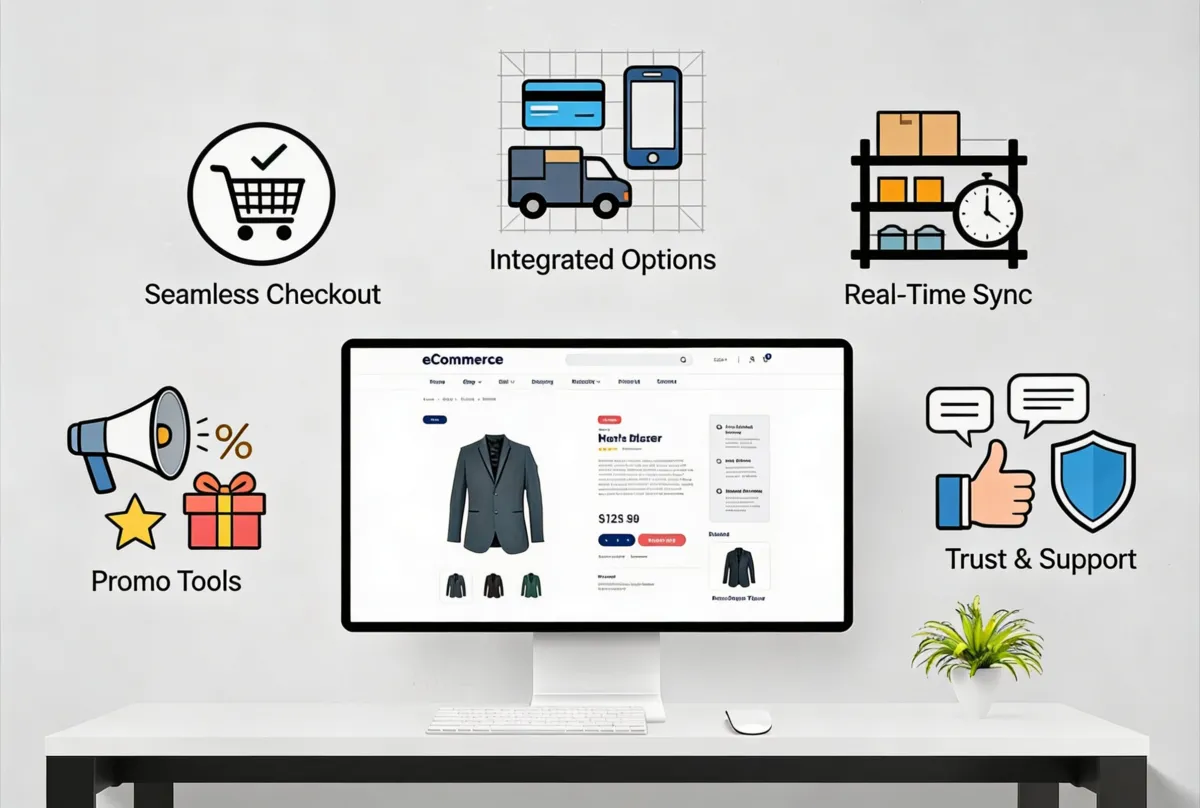
Branded webstores need more than product listings and basic design. The system behind the store plays a key role in how customers shop and how smoothly operations run. The right features help reduce friction and improve conversion.
1. Seamless Checkout Experience
Many customers abandon their cart at the final step because the checkout process feels too long or confusing. Having too many pages or asking for unnecessary details creates friction. When checkout is reduced to a few clear steps and payment feels instant, customers are more likely to complete their order without hesitation.
2. Integrated Payment and Shipping Options
Some customers prefer online banking, others prefer e-wallets or card payments. If their preferred method is not available, they often leave without completing the purchase. The same happens with delivery. Some expect fast delivery options while others prefer lower-cost shipping. A store that offers flexibility feels more convenient and familiar to shop from.
3. Real-Time Inventory Synchronization
Nothing creates frustration faster than ordering something that turns out to be out of stock. This usually happens when inventory is not synced properly across channels. When stock updates instantly after every sale, both the business and the customer stay aligned, and situations like overselling or order cancellations can be avoided.
4. Marketing and Promotion Tools
Shoppers are naturally drawn to clear deals and structured promotions. When they see bundle offers or limited-time discounts applied directly at checkout, they tend to complete purchases faster. Without these tools, businesses often rely too much on manual work, which slows down campaign execution during peak periods.
5. Customer Engagement and Trust Features
People rarely buy from a store they do not trust. Seeing real customer reviews, clear ratings, and responsive support makes a big difference in decision-making. Even small things like a visible chat button or a simple return policy can reduce hesitation and make the store feel more reliable.
How to Build a High-Converting Branded Webstore? (Step-by-Step)
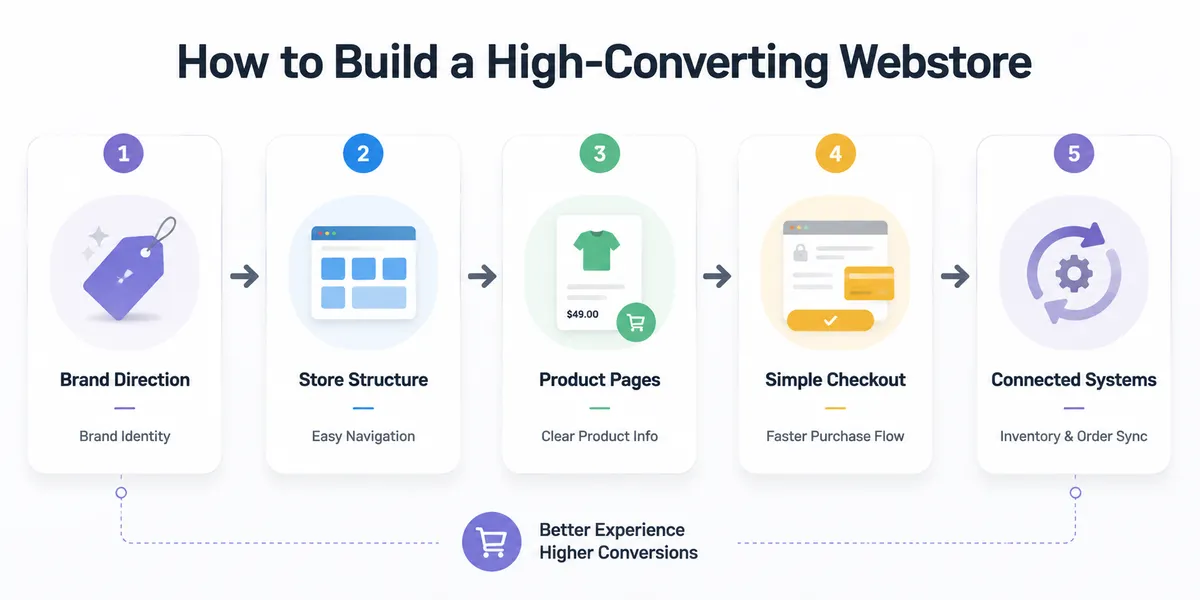
Building a high-converting webstore is not just about design or platform setup. Each step affects how customers experience the store and whether they complete a purchase.
Step 1: Define the direction of the brand
Before anything is built, the direction of the store needs to be clear. This includes how the brand should be positioned, how products are presented, and what kind of shopping experience customers should expect. Without this clarity, the website can feel inconsistent and may reduce trust during first-time visits.
Step 2: Structure the store based on browsing behavior
Most visitors do not arrive with a fixed purchase in mind. They browse categories, compare options, and leave quickly when they cannot find what they are looking for. A clear structure helps reduce search time and keeps users engaged while they explore products.
Step 3: Design product pages that support fast decisions
Customers often decide within seconds after landing on a product page. When key details are missing or difficult to understand, they tend to delay the decision or leave the page. Clear visuals, simple descriptions, and visible pricing help reduce hesitation during this stage.
Step 4: Keep checkout simple and direct
A large number of abandoned carts happen at the final step of the purchase. This usually occurs when checkout feels complicated or requires too many unnecessary actions. A simplified flow helps customers complete payment without interruption.
Step 5: Connect systems for smoother operations
As order volume grows, manual updates across inventory and sales channels become harder to manage. When systems are connected, stock updates and order processing stay more consistent, especially during high traffic periods when mistakes are more likely to happen.
Why SiteGiant is the Best Solution for Branded Webstores?
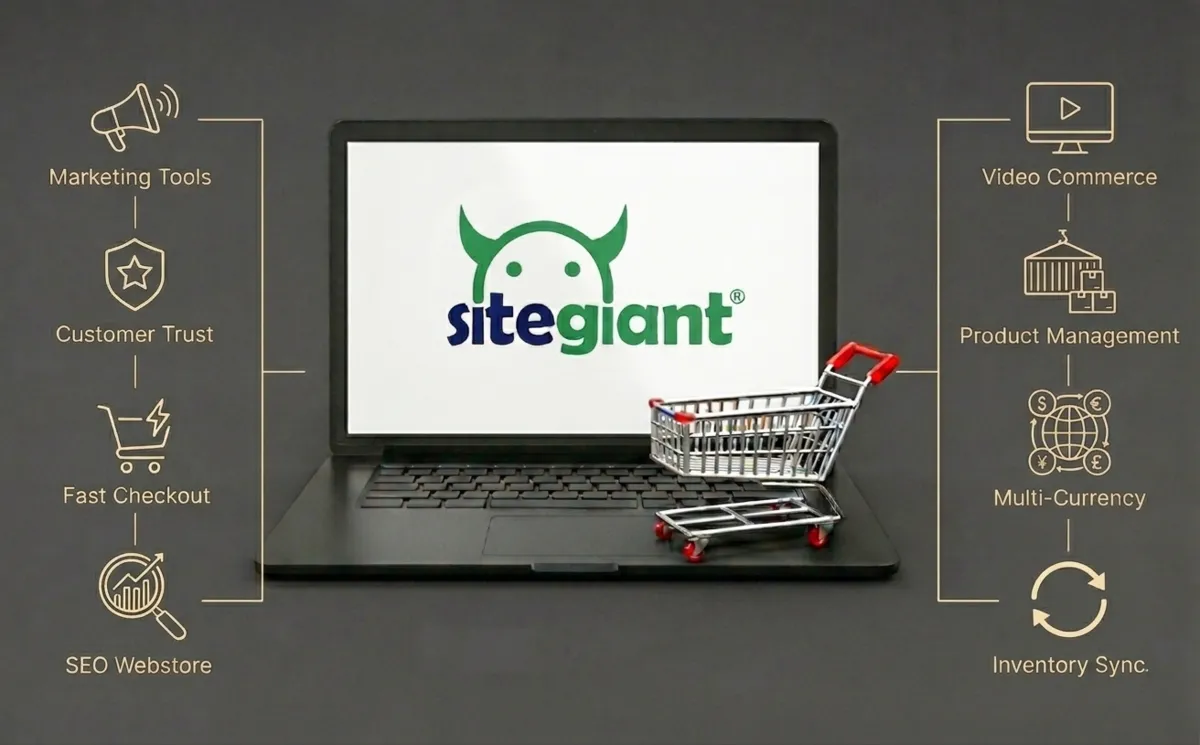
Building a branded webstore requires more than just an attractive design. Businesses also need a system that supports smooth customer experiences, efficient operations, and long-term growth as order volume increases. SiteGiant Webstore helps businesses manage these areas through one connected eCommerce platform designed to support both conversion performance and daily operations
8 Key Features & Capabilities
1. Easier Product Management
Managing products separately across multiple sales channels often creates unnecessary work. Product information, pricing, and stock levels can easily become inconsistent when updates are done manually. Products can be managed from one centralised catalog, making it easier to keep information accurate across the webstore and integrated sales channels while reducing repetitive work during campaigns or new launches.
2. Real-Time Inventory Sync
Inventory mismatches are one of the biggest problems during busy sales periods. A product may already sell out on Shopee while the webstore still shows available stock, leading to overselling and customer complaints. Stock levels update automatically across connected channels after every purchase, helping businesses maintain more accurate inventory and reduce unnecessary order cancellations.
3. Faster Checkout Experience
Many customers leave during checkout when the process feels too long or complicated. Some stores require too many form fields while others offer limited payment methods that do not match customer preferences. A simplified checkout experience with online banking, e-wallets, credit cards, Buy Now Pay Later, and Cash on Delivery support helps customers complete purchases more smoothly.
4. Video Commerce Experience
Many customers now prefer watching products before deciding to buy, especially for categories like fashion, beauty, gadgets, and home products. Short videos and live product demonstrations help customers understand the product more clearly and reduce hesitation before checkout. On-site live streaming and shoppable videos also keep customers engaged within the webstore instead of leaving to view content on other platforms.
5. SEO-Friendly Webstore Structure
Many businesses depend heavily on paid ads because their website is difficult to discover through search engines. Once advertising slows down, traffic often drops immediately. An SEO-friendly webstore structure combined with blog publishing features helps businesses improve long-term visibility and attract more organic traffic through search results.
6. Built-In Marketing Features
Managing promotions manually can become difficult when multiple campaigns are running at the same time. Marketing tools such as vouchers, bundle deals, add-on deals, and customer group pricing help businesses launch campaigns faster and manage promotions more efficiently without relying heavily on additional tools.
7. Customer Trust Features
Customers are more likely to buy when they feel confident about the store. Reviews and ratings often influence purchasing decisions, especially for first-time buyers. Shopee product ratings can be displayed directly on the webstore to create stronger trust signals and help customers feel more confident before making a purchase.
8. Multi-Currency Support
Selling to customers from different countries becomes more difficult when pricing is limited to one currency. Customers may hesitate when they need to estimate conversion rates themselves. Multi-currency checkout allows customers to view prices based on their browsing location, creating a smoother shopping experience for cross-border sales.
Frequently Asked Questions (FAQ)
What is a branded webstore?
A branded webstore is an eCommerce website owned by a business that allows full control over branding, product presentation, and customer experience. Unlike marketplaces, it is fully managed by the brand itself.
Why do businesses need a branded webstore instead of only selling on marketplaces?
Marketplaces help with traffic, but they limit branding and customer ownership. A branded webstore allows businesses to build direct customer relationships, improve conversion rates, and have more control over marketing and pricing.
What makes a branded webstore high converting?
A high-converting webstore focuses on user experience, fast loading speed, clear product pages, and a simple checkout process. Trust elements like reviews and secure payment options also play an important role.
How can a branded webstore improve sales?
It improves sales by reducing friction in the buying process. When customers can easily find products, trust the store, and complete checkout quickly, they are more likely to finish their purchase.
Is it difficult to manage a branded webstore?
It depends on the system used. With the right setup, many processes such as inventory updates, order handling, and promotions can be automated, making it easier to manage even as the business grows.
Conclusion
In 2026, many businesses already bring traffic to their webstores but still lose sales at the final step. Customers leave when the website feels slow, when checkout takes too long, or when they are not confident enough to complete a purchase. These issues often come from gaps in experience rather than lack of demand. A branded webstore works best when it supports the full shopping journey in a simple way. This includes keeping inventory accurate, making product information easy to understand, and reducing friction during checkout. When these parts are not connected, even strong marketing campaigns struggle to deliver results.
SiteGiant Webstore helps businesses handle these challenges through one connected system that supports daily operations and online selling. It gives businesses clearer control over how products are managed across channels, which helps reduce errors that usually happen when systems are separated. It also supports faster decision-making because order and inventory data stay updated in real time.
Contact SiteGiant today for a FREE consultation and see how your webstore can be improved for better performance and more consistent conversions.