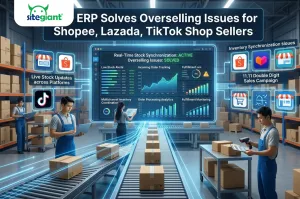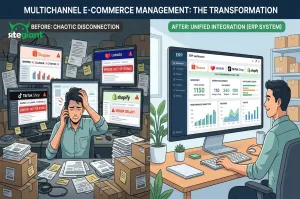
Running an eCommerce business can sometimes feel like fighting an uphill battle. Imagine you and your staff managing hundreds of Shopee, Lazada, and TikTok Shop orders during a big sales campaign while relying only on manual updates. Without the right system, operations quickly spiral into chaos, leading to challenges such as:
Endless manual work
- Your staff waste hours checking stock spreadsheets, printing invoices, and updating orders one by one, leaving little time to focus on growing the business.
Overselling and stockouts
- Inventory updates can’t keep up with sales, forcing you to cancel paid orders or disappoint customers with “out of stock” messages.
Order mistakes
- Wrong or missing items get shipped out, leading to costly returns, refunds, and angry customers who may never come back.
Slow fulfillment
- Picking and packing take too long, delaying deliveries and hurting your seller ratings during critical sales campaigns.
Rising costs
- More manpower is needed to fix mistakes, process refunds, and handle complaints,which leads to cutting deep into your margins.
At the end of the day, you’re exhausted, and yet problems keep piling up—eating into your profits and hurting your reputation.
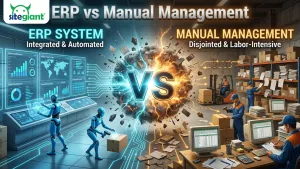
This is where a Warehouse Management System (WMS) makes all the difference. A WMS is specialized software that streamlines and automates the entire warehouse process — from tracking inventory in real time to guiding efficient picking, packing, and shipping. Instead of relying on scattered data and manual work, sellers gain a centralized system that ensures accuracy, reduces errors, and improves fulfillment speed.
Today, WMS adoption is rising, with systems offering different features, pricing, and complexity. More options mean better choices — but also tougher decisions. Choose the wrong one and you’ll waste money on features you don’t need; choose the right one and it becomes the backbone of your growth. So how do you know which WMS is right for your business?
In this blog, we will be guiding you by showcasing 10 popular WMS systems in Singapore, comparing multiple WMS in the market, helping you identify which solution best supports your eCommerce success.
How Does the WMS System Work?
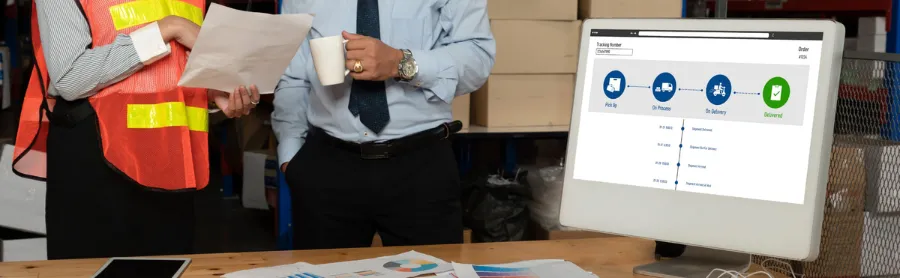
Before you decide which WMS is the right fit for your business, it’s important to first understand the basics — what a WMS actually does and how it helps transform warehouse chaos into an organized, efficient system. By seeing how it works in practice, you’ll have a clearer picture of why it’s such a game-changer for managing inventory, orders, and fulfillment.
A Warehouse Management System (WMS) works like the central brain of your warehouse, connecting every step of your fulfillment process into one smooth flow.
Here’s how a WMS typically works in an eCommerce business:
1. Inventory Tracking
Every product entering or leaving the warehouse is recorded by the WMS. Stock levels are updated in real time, giving sellers full visibility across all channels and preventing overselling or stockouts.
2. Order Processing
Customer orders from Shopee, Lazada, TikTok Shop, or your webstore are consolidated automatically into a single system, eliminating manual checking and reducing errors.
3. Picking & Packing Guidance
The WMS directs warehouse staff on what to pick and where to find it, often using barcodes or scanners. This reduces mistakes, speeds up operations, and ensures orders are packed with the right items.
4. Shipping & Courier Integration
Instead of logging into multiple courier platforms, the WMS integrates directly with delivery providers. Labels, pickups, and tracking details can all be managed in one place.
5. Analytics & Optimization
A WMS generates reports on stock turnover, order accuracy, fulfillment speed, and courier performance. These insights help businesses forecast demand, optimize layouts, and improve efficiency.
In essence, a WMS transforms warehouse operations from a manual, error-prone process into a smart, automated, and scalable system — helping eCommerce businesses handle growth without sacrificing accuracy or customer satisfaction.
Unlocking Efficiency: How a WMS Transforms Your eCommerce Business?

By understanding how a WMS functions, it’s easy to see why it has become essential for modern eCommerce. Beyond organizing stock and automating tasks, a WMS directly improves efficiency, scalability, and customer satisfaction. Whether you’re running a small warehouse or managing multiple fulfilment centres, a well-implemented WMS helps you work smarter, not harder.
Let’s take a closer look at the key benefits of using a WMS system, and how it can transform the way you run your business.
Benefits | What It Means For Your Business |
Real-Time Inventory Accuracy | Always know your stock levels across all channels. No more overselling popular items or disappointing customers with “out of stock” messages after purchase. |
Faster, Error-Free Fulfillment | Guided picking and automated packing reduce mistakes. Customers get the right item on time, cutting down on costly returns and complaints. |
Improved Efficiency & Productivity | Automates repetitive tasks like stock updates, label printing, and order syncing. Your team spends less time on manual work and more time on growing sales. |
Internal Automation Enhancement | Work tasks are automated assigned to staff through SiteGiant, and leaders can track progress instantly and errors are greatly reduced. |
Scalability for Growth | Handles spikes during Mega Sales or festive campaigns smoothly. You can process 10x more orders without hiring 10x more staff. |
Enhanced Customer Satisfaction | Accurate stock and fast delivery lead to happier customers, better reviews, and more repeat purchases. Your brand earns trust and loyalty. |
By understanding how a WMS functions, it’s easy to see why it has become essential for modern eCommerce. Beyond organizing stock and automating tasks, a WMS directly improves efficiency, scalability, and customer satisfaction. Whether you’re running a small warehouse or managing multiple fulfilment centres, a well-implemented WMS helps you work smarter, not harder.
Top 10 Popular WMS System in Singapore
By now, you know how a WMS works and why it’s critical for eCommerce growth. But with so many providers in Singapore, ranging from global giants to local innovators — how do you know which one is right for your business?.
The truth is, not all WMS are created equal. Some shine when it comes to enterprise-level supply chain management, while others are designed with growing online sellers in mind. Choosing the right one can be the difference between a warehouse that constantly slows you down and one that runs like a well-oiled machine.
That’s why we’ve put together a list of the Top 10 WMS systems in Singapore.
1. SiteGiant WMS
A cloud-based WMS designed specifically for eCommerce sellers. It integrates tightly with popular marketplaces and logistics providers, making it a great local solution.
Key Features:
- POS system integration
- Multi-warehouse management
- Carrier manifest generation
- Multichannel marketplace integration
- Customizable shipping labels
- Mobile picking support (PDA / smartphone)
- Unified system with ERP & WMS
Pros:
- Seamless integration with Shopee, Lazada, TikTok Shop
- Easy to use with strong local support
- Affordable compared to global ERP systems
- Advanced automation feature support
- Highly advanced with analytics-driven decision-making
- Comprehensive control over daily warehouse operations
Cons:
- Limited global supply chain functionalities
2. ScaleOcean WMS
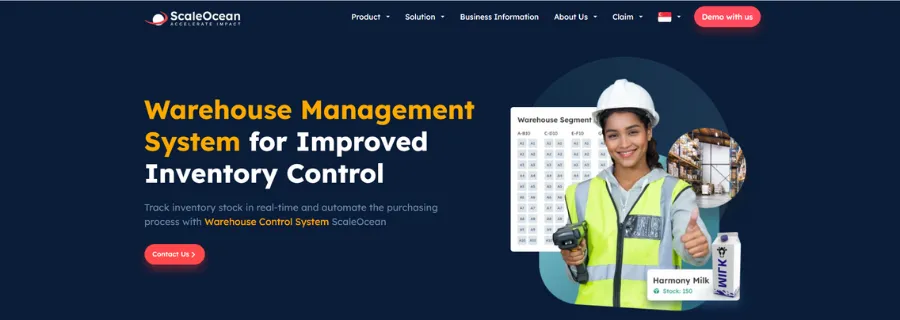
ScaleOcean is a modern cloud-based WMS for Southeast Asian SMEs. It emphasizes usability, automation, and cost-efficiency.
Key Features
- Smart order picking & routing
- Inbound/outbound management
- Barcode generation & scanning
- Stock audit tools
Pros
- Simple and user-friendly
- Cloud-based accessibility
- Good fit for SMEs in ASEAN
Cons
- Limited international presence
- Smaller support network compared to global WMS
- Fewer advanced customization features
3. Zoho Inventory
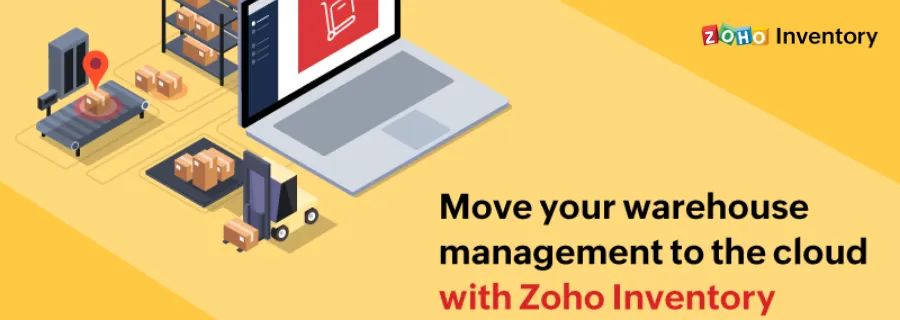
A cloud-based and standalone inventory system designed for SMEs. Known for its affordability and simplicity, Zoho Inventory offers essential WMS functions without heavy IT requirements.
Key Features:
- Multi-location stock management
- Real-time inventory tracking
- Stock transfer between warehouses
- Reporting tools
Pros:
- Cost-effective for small businesses
- User-friendly interface
- Flexible for SMEs starting out
Cons:
- Limited automation and advanced warehouse functions
- Not scalable for large or multi-warehouse enterprises
- Customization for item records and reporting is restricted
4. ERPAG WMS
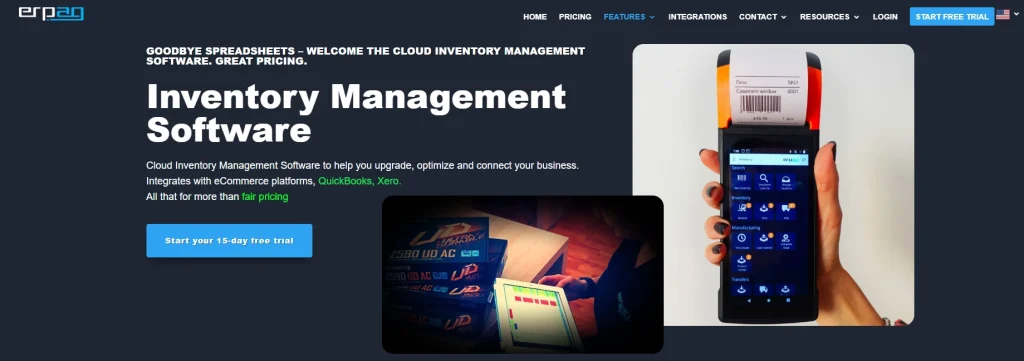
A cloud-based inventory and production management system popular among SMEs and small manufacturers. It focuses on simplifying inventory control, order management, and light manufacturing in one easy-to-use platform.
Key Features:
- Real-time inventory tracking
- Barcode scanning support
- Basic accounting and reporting
- Light manufacturing (BOM & work orders)
Pros:
- Easy to use and set up
- Cloud-based — access from anywhere
- Combines inventory, sales, and production
- Affordable for small businesses
Cons:
- Limited offline use
- Some integrations need setup
- Fewer automation options
- Smaller user community
5. SAP Inventory (SAP WM / SAP EWM)

SAP’s WMS offering includes SAP WM (Warehouse Management) and SAP EWM (Extended Warehouse Management). While WM handles standard warehouse operations, EWM provides advanced automation and supply chain features.
Key Features:
- SAP WM: Basic warehouse tasks (goods receipt/issues, stock management)
- SAP EWM: Advanced automation, yard and labor management, supply chain visibility
- Deep integration with SAP ERP (S/4HANA)
- Flexible warehouse configuration options
Pros:
- Globally recognized, enterprise-standard solution
- Automation and analytics with SAP EWM
- ERP integration across finance, sales, and supply chain
Cons:
- Very expensive to implement and maintain
- Complex setup requiring specialized consultants
- SAP WM is being phased out in favor of EWM
6. Oracle Fusion Cloud WMS
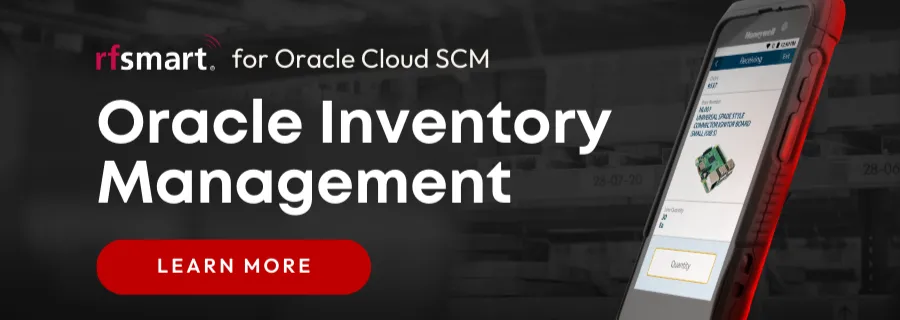
Oracle Fusion Cloud WMS is an enterprise-level solution built for complex, global supply chains with AI-driven automation.
Key Features
- AI/ML-driven warehouse optimization
- Real-time inventory visibility
- Labor management tools
- Deep Oracle ERP/SCM integration
Pros
- Highly scalable and global-ready
- Advanced analytics and automation
- Strong enterprise support network
Cons
- Expensive licensing
- Complex, long implementation
- Requires strong IT expertise to manage
- Overkill for smaller businesses
7. Infor WMS
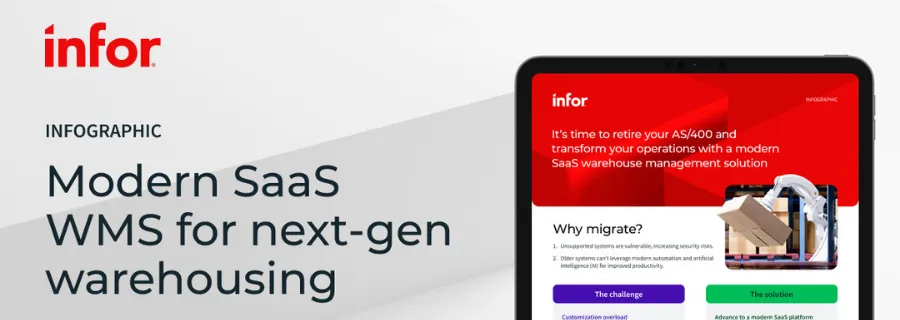
A cloud-based WMS popular among SMEs and 3PL providers. It provides strong real-time visibility and is well-suited for logistics operators.
Key Features:
- Multi-site inventory management
- Real-time inventory tracking
- 3D visual warehouse
- 3PL billing and invoicing
Pros:
- Tailored for SMEs and logistics businesses
- Affordable compared to enterprise solutions
- Easy-to-use cloud-based interface
Cons:
- Limited customization compared to ERP-integrated systems
- Not as scalable for multinational corporations
- Limited integration with other systems
8. Körber WMS (formerly HighJump)
Körber WMS supports large-scale logistics, 3PLs, and enterprises with strong omnichannel and automation capabilities.
Key Features
- Omnichannel order fulfillment
- Automation & robotics integration
- Configurable workflows
- Scalable for high-volume logistics
Pros
- Great for 3PL and logistics networks
- Flexible and customizable
- Strong global support
Cons
- Steeper learning curve
- Higher enterprise pricing
- Longer implementation cycles
- Limited awareness among SMEs
9. Fishbowl WMS

Fishbowl is popular with SMEs and manufacturers for inventory and light manufacturing workflows. It connects smoothly with accounting tools.
Key Features
- Multi-location warehouse management
- Real-time inventory tracking
- Order and purchase management
- Barcode scanning and tracking
Pros
- Great for SMEs & small manufacturers
- Affordable and accounting-friendly
- Easy to integrate with QuickBooks
Cons
- On-premise setup can be complex
- Some integration issues reported
- Limited advanced automation features
- Smaller global support community
10. Infolog WMS
Infolog WMS is trusted across Singapore and Malaysia, known for rapid deployment and flexibility in different industries.
Key Features
- RF, RFID & voice picking
- Lot, batch, and serial tracking
- Graphical warehouse layout tool
- Wave picking & replenishment
Pros
- Proven track record in SEA
- Multi-language support
- Fast deployment (~3 months)
Cons
- Less global coverage than SAP/Oracle
- May require training for advanced modules
- Not as cloud-native as newer WMS platforms
Quick Comparison
WMS Provider | Strengths | Weaknesses | Best For |
|
SiteGiant WMS | Real-time stock sync · Marketplace & courier integration · POS support · Affordable · User-friendly · Strong local support | Focused mainly on eCommerce | eCommerce SMEs across SEA |
(5.0) |
ScaleOcean WMS | Simple · User-friendly · Cloud-based | Limited international presence · Fewer advanced features | Local SMEs in ASEAN |
|
Zoho Inventory | Affordable · Easy to use · Multi-location support · Quick setup | Limited automation · Not scalable for enterprises | Startups & small businesses |
(4.0) |
ERPAG WMS | Cloud-based and accessible from any device · Combines inventory, sales, purchasing & production in one system · | Limited offline functionality · Some integrations need manual setup · Fewer automation options | SMEs, small manufacturers & growing trading businesses |
|
SAP WM / EWM | Enterprise-standard · Advanced automation · Deep ERP integration | Very expensive, complex · Requires consultants | Large enterprises with global supply chains |
|
Oracle Fusion WMS | AI/ML optimization · Highly scalable · Enterprise support | Expensive licensing · Complex setup, overkill for SMEs | Global corporations, complex operations |
|
Infor WMS | Real-time visibility · SME & 3PL friendly · Strong billing features · Easy to deploy | Limited customization · Not ideal for multinationals | SMEs, logistics, and 3PL providers |
|
Körber WMS | Strong for 3PLs · Scalable · Automation-ready | Steeper learning curve, higher cost, long setup | Large logistics networks & 3PLs |
|
Fishbowl WMS | Affordable · Integrates with QuickBooks · Great for manufacturers | On-premise complexity · Limited automation · Small support community | SMEs & small manufacturers |
|
Infolog WMS | Proven in SEA · Multilingual · Fast deployment | Less global coverage · Needs training, not fully cloud-native | Regional logistics & multi-channel sellers |
|
 Rating (out of 5)
Why SiteGiant WMS Stands Out as the Smarter Choice in Singapore?

We can see that while all WMS systems may cover the essentials of inventory management, their real value lies in the unique features they offer — and this is where SiteGiant shines as well.
What makes SiteGiant different from other WMS providers isn’t just what it does, it’s how it transforms the way Singaporean and Southeast Asian eCommerce businesses operate. SiteGiant is built with you, the eCommerce seller, in mind. It connects directly with marketplaces like Shopee, Lazada, and TikTok Shop, so your orders flow into one place without the usual chaos.
Here’s how SiteGiant WMS features work together to give your business an edge over traditional warehouse systems:
Feature | Description | Why It Stands Out |
Mobile Picking & Receiving | Use a PDA or smartphone to scan items during receiving and picking, reducing errors and keeping stock updated in real time. | Cuts paperwork and guesswork, making your team faster and more accurate. |
Wave Shipments | Group similar orders and fulfill them in batches for more efficient picking. | Saves time and boosts efficiency during high-volume order processing. |
Batch Tracking & Expiry Management | Track batches and expiry dates for products like food, cosmetics, or any shelf-life items. | Ensures customers always receive the freshest, correct stock—reducing returns. |
Staff Performance Tracking | Monitor staff efficiency and accuracy with real-time performance tracking. | Helps you reward top performers and improve overall warehouse productivity. |
CCTV Fulfillment Monitoring | Connects directly with warehouse CCTV to verify packing accuracy, deterring internal mistakes or dishonest behavior. | Quickly resolves disputes with customers and builds stronger trust. |
Success Stories: Seeing the Difference in Action
We’ve talked about the features that make SiteGiant WMS stand out, but the real proof lies in how sellers are using it to transform their operations. Let’s look at two success stories — Rainbow Handicraft and KK Smartbuy, and see how SiteGiant helped them take control of their warehouses and scale with confidence.
Rainbow Handicraft
“Save costs by reducing human errors in day-to-day warehouse operation!”
SiteGiant WMS has digitalised our warehouse operations, making it convenient for us to fulfil orders from multiple stores within one platform. Training staff has become easy by using PDA and scanning, eliminating the need to memorise complex procedures. It has also significantly helped our company save costs by reducing human errors in day-to-day warehouse operations.⭐⭐⭐⭐⭐ 5/5
Sangeetha
eCommerce Operational Assistant
Rainbow Handicraft
KK Smartbuy
“We did a comparison and found that SiteGiant Express Fulfillment is 3x faster than our normal fulfillment method.”
We can filter the orders based on picking zone and rack group. SiteGiant will automatically help us to consolidate and separate the items for picking based on zone and rack group. Our pickers just have to follow the row rack to pick the item smoothly.⭐⭐⭐⭐⭐ 5/5
Alexis Foong
Co-Founder
KK Smartbuy
From here we can see that SiteGiant WMS has shown how the right system can completely elevate a seller’s business. No matter the industry, SiteGiant helps sellers move beyond manual limitations and turn their warehouse into a true growth engine.
Choosing the Right WMS for Your Business
In today’s competitive eCommerce landscape, having a reliable Warehouse Management System (WMS) is no longer optional, but the foundation for smooth operations, faster fulfillment, and long-term growth. The right choice depends on your business size, growth stage, and the level of automation you need.
For Singapore sellers, SiteGiant WMS isn’t just another system, it’s a solution built with you in mind. From real-time inventory tracking, multi-warehouse management and logistics integration to other more smart features, it covers all the essentials to keep your business running smoothly. Backed by strong local support and scalable features, SiteGiant gives all eCommerce businesses the freedom to grow faster, without being tied down by the high costs and complexity of enterprise systems.
At the end of the day, the best WMS is the one that aligns with your business goals. Whether you’re an SME looking for simplicity or an enterprise managing multi-country supply chains, investing in the right system will save time, cut costs, and keep your customers coming back.
FAQ About SiteGiant WMS
Are WMS and ERP the same?
No. A WMS manages warehouse operations like stock tracking, picking, and shipping, while an ERP (Enterprise Resource Planning) covers wider business functions such as finance, sales, and HR.
What are the types of WMS systems?
The main types are Standalone WMS, ERP-integrated WMS, Cloud-based WMS, and Supply Chain WMS — each with different features and complexity.
What is the difference between warehouse management and inventory management?
Inventory management focuses on tracking stock levels — knowing what you have, where it is, and when to reorder. Warehouse management goes further, covering the entire workflow inside the warehouse, from storing items to picking, packing, and shipping.
How to choose the best WMS software for your business?
Choosing the right WMS depends on your business needs. Smaller businesses or startups often benefit from simple, cloud-based systems that are affordable and easy to use, while enterprises may require ERP-integrated systems with advanced automation.
Can SiteGiant’s WMS system integrate with the POS system?
Yes. SiteGiant’s WMS integrates seamlessly with its built-in POS system, allowing businesses to manage online and offline sales in one place. This means inventory updates are synchronized in real time across both warehouse and retail outlets, reducing errors and overselling. For retailers adopting an Online-Merge-Offline (OMO) strategy, this integration makes it easy to unify sales channels and streamline warehouse operations.